
Meditation for manifestation is a calm, focused session where you relax the body, quiet the mind, and vividly rehearse your goal as already fulfilled, ending with gratitude and one clear next step. The best type for most people is a guided visualization or a pre-sleep practice.
This guide explains whether it works, which technique to use, a step-by-step 10-minute practice, a short morning version, the truth about 432 Hz and binaural beats, and the common mistakes.
What is meditation for manifestation?
Meditation for manifestation combines relaxation and mental rehearsal: you settle into a calm state, then hold a detailed inner scene of your desired outcome, feeling as if it is already real.
It usually has four parts:
- Settle: slow breathing and body relaxation to lower stress.
- Focus: a single intention, phrased in the present tense.
- Visualize: a short, sensory-rich scene that implies the goal is done.
- Close: gratitude, then a return to normal awareness and one action.
For the wider practice this supports, see our guide to how manifesting works.
Can meditation actually help you manifest?
Yes, in the ways that are well supported: meditation lowers stress, sharpens focus, and makes mental rehearsal more vivid, all of which help you pursue a goal. It does not send signals to the universe, but it does change your state and your follow-through.
- Lower stress: regular meditation reduces anxiety and reactivity, per Harvard Health, which makes it easier to act calmly on a goal.
- Better focus: attention training carries over into staying on task.
- Stronger visualization: a relaxed mind produces more detailed imagery, and process-focused mental rehearsal is linked to better performance.
- A bridge to sleep: the drowsy state after meditation is ideal for the pre-sleep method Neville Goddard called SATS.
A fair objection is that this makes meditation sound like a productivity tool stripped of meaning. That is not the intent. For many people the sense of connection, stillness, and trust that meditation brings is valuable on its own, and it also happens to support goal work. The honest claim is narrow: meditation reliably changes your inner state, and a calmer, more focused state makes you better at noticing opportunities and taking action. Whether you also experience it as spiritually meaningful is yours to decide, and the two are not in conflict.
Which type of meditation is best for manifestation?
Guided visualization is the best manifestation meditation for beginners, and a pre-sleep practice is best for impressing a new outcome. Choose based on your goal and the time you have.
| Type | What you do | Best for |
|---|---|---|
| Guided visualization | Follow an audio track that walks you through a scene | Beginners, staying focused |
| Pre-sleep (SATS) | Loop a short “wish fulfilled” scene as you drift off | Impressing a specific outcome |
| Breath or mindfulness | Watch the breath to calm down first | Clearing anxiety before visualizing |
| Mantra or affirmation | Repeat a present-tense phrase slowly | Shifting self-talk, building belief |
| Body scan | Move attention through the body to relax | People who are too tense to picture anything |
| Walking meditation | Slow, aware walking while holding the feeling of the goal | Restless minds, morning energy |
Most people do well starting with a 10-minute guided visualization and adding a 2-minute pre-sleep scene at night.
A quick way to choose: if your main problem is a busy, anxious mind, start every session with breath or body-scan work and only visualize once you feel settled. If your main problem is that visualization feels flat or forced, use a guided track so someone else carries the structure while you just follow along. If you already relax easily and picture things vividly, go straight to the pre-sleep scene, which is the most direct method for a single specific goal.
How do you do a manifestation meditation, step by step?
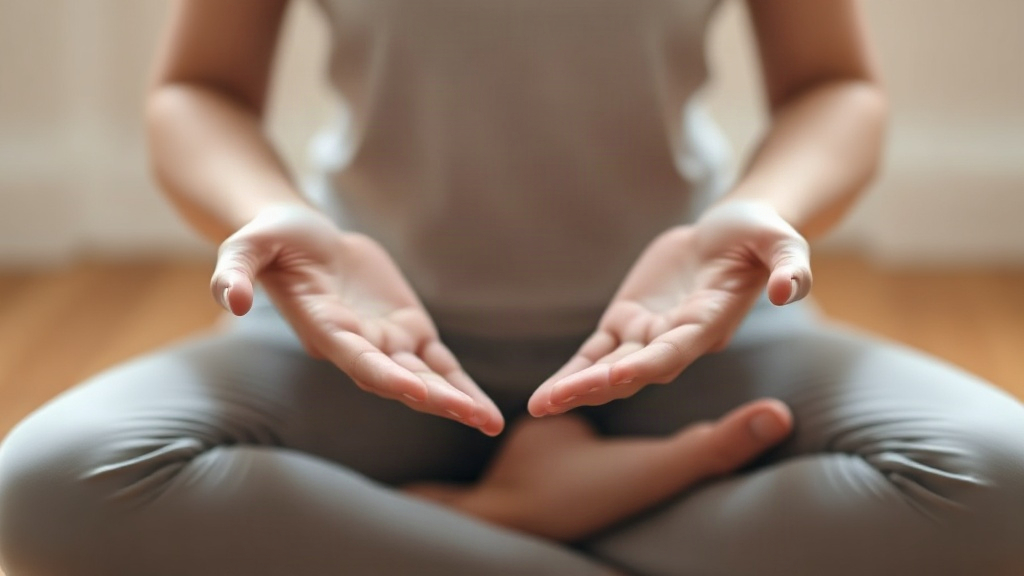
A 10-minute manifestation meditation moves through settle, relax, visualize, feel, thank, and return, then ends with one action.
- Settle (1 minute). Sit or lie comfortably. Close your eyes. Take 5 slow breaths, longer on the exhale.
- Relax the body (2 minutes). Move attention from your feet to your head, softening each area.
- Set the intention (30 seconds). State it once, present tense: “I have a warm, secure home of my own.”
- Enter the scene (4 minutes). Picture one specific moment that would only happen if the goal were real. See it from your own eyes. Add sound, texture, temperature, and who is there.
- Feel it as done (1 minute). Let the relief, pride, or calm of it being settled move through you.
- Give thanks (30 seconds). Silently thank it as though it has already happened.
- Return and act (1 minute). Open your eyes, take one breath, and do one small action toward the goal.
The final step matters. A meditation with no action tends to underperform, as covered in our look at whether manifestation works.
A short morning manifestation meditation
A 5-minute morning version keeps the same shape, compressed, and sets your focus for the day.
- Minute 1: 6 slow breaths, exhale longer than the inhale.
- Minute 2: quick head-to-toe body relax.
- Minutes 3 to 4: one vivid scene of the goal fulfilled, from your own point of view.
- Minute 5: name 3 things you are grateful for, then choose the one action you will take today.
If you only have 3 minutes, keep the breathing, the scene, and the action, and drop the body scan. Consistency beats length.
What about 432 Hz, 528 Hz, and binaural beats?
There is no strong scientific evidence that specific tuning frequencies like 432 Hz or 528 Hz have special manifestation power. They can still help as calming background audio, the same way any gentle, steady sound does.
- 432 Hz: an alternative concert-pitch tuning some find warmer than standard 440 Hz. Claims that it “resonates with the universe” are not supported. If it helps you relax, it is doing its job.
- 528 Hz: marketed as a “love” or “miracle” frequency. This is a modern claim with no research behind it.
- Binaural beats: two slightly different tones, one per ear, said to nudge brainwaves. Evidence for effects on relaxation and focus is mixed and modest, not zero.
Use whatever audio helps you settle. Do not pay a premium for a frequency claim.
A practical test: try one session with your chosen track and one in plain silence, and notice which left you more relaxed and more focused afterward. Many people find that any calm instrumental music, or even a fan, works as well as a branded “manifestation frequency.” The active ingredients are the stillness, the breath, and the vivid scene, not the exact pitch of the tone underneath.

What is the 10-10-10 rule, and how does it pair with meditation?
The 10-10-10 rule for manifestation is a daily routine: write 10 things you want, 10 things you are grateful for, and spend 10 minutes visualizing. The 10-minute visualization is where a manifestation meditation fits.
A simple way to run it:
- List 10 wants in a manifestation journal, present tense.
- List 10 gratitudes, specific and small.
- Do the 10-minute meditation above, focusing on one of the wants.
- End with one action toward that want.
Pairing desire with gratitude keeps the practice from tipping into anxious wanting.
Common mistakes and how to fix them
Most manifestation meditation problems come from skipping the calm-down or skipping the action.
- Trying to visualize while tense. Do 2 minutes of breathing or a body scan first, then picture the scene.
- Watching the scene like a movie. Step inside it. See it from your own eyes, not from across the room.
- Making the scene too big. One 30-second moment beats an imagined year.
- Forcing excitement. Aim for calm certainty, the feeling of an ordinary fact.
- No action step. End every session with one concrete thing you do.
- Inconsistency. 5 minutes daily beats 40 minutes once a week.
If you keep falling asleep during a seated session, that is not a failure, it just means your body needed rest. Move the practice earlier, sit more upright, or accept that this one becomes your pre-sleep scene instead. And if your mind wanders constantly, that is normal too. The skill is noticing you have drifted and gently returning to the scene, over and over. A session with 20 gentle returns is a good session, not a broken one.
Frequently asked questions
Which meditation is best for manifestation?
Guided visualization is best for beginners because it keeps you focused, and a pre-sleep practice is best for impressing a specific outcome. Breath or body-scan meditation is useful first if you are too anxious to picture anything clearly.
Can meditation help with manifesting?
Yes, in supported ways: it lowers stress, improves focus, and makes visualization more vivid, which helps you pursue a goal. It does not send signals to the universe, but it changes your state and your follow-through.
What is the 10-10-10 rule for manifestation?
A daily routine of writing 10 things you want, 10 things you are grateful for, and spending 10 minutes visualizing. The 10-minute visualization is a manifestation meditation, ideally ending with one action.
What does 432 Hz do in manifestation?
There is no scientific evidence that 432 Hz has special manifestation power. It is an alternative tuning some people find pleasant, and it can help as calming background audio, like any steady, gentle sound.
How long should a manifestation meditation be?
10 minutes is a good standard, with a 3 to 5 minute version for busy mornings and a 2-minute pre-sleep scene at night. Doing a short session daily works better than a long session now and then.
Try a 10-minute session today
Settle, relax the body, hold one vivid scene of your goal fulfilled, feel it as done, give thanks, and finish with one small action. Do it at the same time tomorrow.
For a gentle daily prompt and a free guided abundance meditation, join our message from the universe.