Meditation reliably sharpens your intuition, your attention, and your awareness of subtle signals in your body and in other people, and many people experience that sharpening as something psychic. Whether meditation produces true psychic abilities, like knowing the future or reading distant places, is still an open and hotly debated question in science. This guide gives you both halves honestly: what the research shows, what the old traditions teach, and a simple 4-week practice you can test for yourself.
Most pages on this topic either promise you’ll open your third eye by Friday or dismiss the whole subject with a sneer. You deserve something kinder and more truthful than either. You can explore this part of yourself with an open heart and a clear head at the same time.
Can meditation develop psychic abilities?
Meditation can clearly develop the inner skills people usually mean by “psychic,” such as quiet knowing, gut feelings, and sensitivity to others, but controlled experiments have not settled whether it creates abilities beyond the ordinary senses. That’s the honest answer, and it’s a hopeful one. Much of what you’re seeking is already within reach.
When people say meditation made them “more psychic,” they usually describe 3 things:
- Stronger hunches that turn out right more often, like sensing a friend is struggling before they say a word.
- Vivid inner imagery during or after sitting, sometimes in the form of symbols or scenes.
- Meaningful coincidences, such as thinking of someone moments before they call.
Each of these is a real experience. The open question is where it comes from. A calmer mind notices far more of what’s already around it, and some of what feels like a message from beyond is your own wisdom finally getting a word in.
A common mistake is treating that question as a threat. You don’t need to prove anything to benefit from sitting in stillness. Your next step is simply to practice, pay attention, and keep honest notes.
What does the research actually say about meditation and psychic abilities?
The research is mixed: a few lab paradigms show small effects above chance, meditation’s specific role is barely tested, and careful replications often fail. Here’s the evidence in plain words, with every source you can check yourself.
The ganzfeld experiments are the strongest case for psi. A person rests in mild sensory quiet, much like meditation, while someone in another room focuses on 1 of 4 images. Pure guessing should score 25%. A 2010 meta-analysis in Psychological Bulletin by Storm, Tressoldi, and Di Risio pooled 29 studies from 1997 to 2008 and found a 32.2% hit rate. The same line of research reports that participants selected for favorable traits, such as prior psychic experiences or meditation practice, scored higher than unselected volunteers (Ganzfeld experiment overview). Critics such as Ray Hyman and Richard Wiseman have pointed to leaks and procedural flaws in earlier trials.
The American Psychologist debate shows how divided scientists remain. In 2018, Etzel Cardeña reviewed the evidence and argued psi effects are comparable in strength to many accepted findings in psychology. In 2020, Arthur Reber and James Alcock replied in the same journal that such effects would break well-established physics and can’t be real.
A direct test with yoga practitioners is the closest thing to a meditation study. Researchers from India’s S-VYASA university and the Institute of Noetic Sciences tested precognition in 273 yoga students, including after a 40-day practice. Their main tests found no statistically significant results, with only weak hints in follow-up analysis.
| Research line | What was tested | What it found | How much weight to give it |
|---|---|---|---|
| Ganzfeld meta-analysis (2010) | Picking a target image in a meditation-like state | 32.2% hits vs 25% chance across 29 studies | Moderate, still disputed over methods |
| Bem precognition studies (2011) | Whether future events affect present responses | Positive in the original paper | Low, 3 replications failed |
| Stargate Project (1977 to 1995) | Remote viewing for US intelligence | Some lab effects, no usable intelligence | Low for practical use |
| IONS yoga study | Precognition in 273 yoga students | No significant main effects | A direct test that came up empty |
| Meditation brain studies (2005 onward) | Attention and body awareness | Measurable changes in the brain | Strong for intuition, silent on psi |
Daryl Bem’s 2011 “Feeling the Future” paper reported precognition effects, but Ritchie, Wiseman, and French ran 3 replications in 2012 and found nothing. And the US government’s remote-viewing program, known as the Stargate Project, was closed in 1995 after an outside review found it never produced actionable intelligence.
The takeaway: hold your experiences with curiosity, not certainty, and let the benefits you can measure carry you forward.
What powers can you get from meditation?
The well-documented powers of meditation are steadier attention, deeper body awareness, calmer emotions, and clearer perception of other people. These may sound modest next to clairvoyance, yet they’re the very skills that make intuition trustworthy.
A 2005 Harvard and Massachusetts General Hospital study led by Sara Lazar compared 20 experienced meditators with 15 matched non-meditators. The meditators had thicker tissue in brain regions tied to attention and interoception, which means your sense of what’s happening inside your own body. One of those regions, the right anterior insula, helps turn a tight stomach or a softening chest into a felt “yes” or “no.”
- Attention: you notice the small shift in a friend’s voice that others miss.
- Interoception: you feel the body’s early warning before your thinking mind catches up.
- Emotional calm: fear stops shouting over the quieter signal underneath.
- Presence: you’re here for what’s happening now instead of lost in replays.
If anxiety tends to drown out your inner voice, a gentle practice like mindfulness meditation for anxiety is often the best first step toward hearing it. Your next step: notice one body signal today and name it without judging it.
What is the difference between intuition and psychic ability?
Intuition is fast knowing that comes from experience and subtle cues you’ve taken in without realizing it, while a psychic ability would be knowing something with no sensory route to it at all. The two can feel identical from the inside, which is why the difference matters.
Psychologists Daniel Kahneman and Gary Klein studied gut feelings among firefighters, nurses, and other experts. In a 2009 paper in American Psychologist, they concluded that intuition becomes reliable when 2 conditions are met: the environment has real patterns, and the person has had enough practice with clear feedback. A veteran nurse who “just knows” a patient is getting worse is reading dozens of small signs at once.
Meditation helps both kinds of knowing in the same way. It lowers the mental noise so faint impressions can surface. Whatever their true source, a quiet mind catches them.
A common objection: “If it can be explained, it isn’t spiritual.” You might gently question that. Many wisdom traditions see ordinary perception, fully awake, as sacred in itself. Your takeaway: honor every impression, then check it.
What do the yoga and Buddhist traditions teach about psychic powers?
Both traditions describe psychic powers as possible side effects of deep meditation, and both warn you not to chase them. That warning is one of the most useful things you’ll ever hear on this path.
In Book 3 of the Yoga Sutras, Patanjali lists the siddhis, extraordinary powers such as knowing the past and future or reading another’s mind. Then, in verse 3.37, he describes them as distractions on the way to deeper stillness (siddhi overview). In the Buddhist tradition, the supernormal powers called abhijñā appear in early texts too, and the Buddha taught that displaying or indulging them should be avoided.
The reason is quietly wise. Once you meditate to get something, the ego takes over the practice. You start grading each session by whether a vision came. Peace becomes performance.
That’s why a practice like meditation for spirit, aimed at nourishing your inner self, tends to open more doors than hunting for powers. Your next step: sit to meet yourself, and let any gifts arrive as guests.
Which meditations do people use for psychic development?
The 5 most common approaches are third eye focus, breath-counting, visualization, receptive open awareness, and sensory-quiet sessions modeled on the ganzfeld. Each trains a different inner muscle, so it helps to know what you’re choosing.
| Technique | How it works | What it trains | Starting dose |
|---|---|---|---|
| Third eye focus | Rest your attention softly on the point between your brows | Concentration and inner imagery | 5 to 10 min/day |
| Breath-counting | Count breaths from 1 to 10, then start again | Steady attention, less mental noise | 10 min/day |
| Visualization | Picture a place or person in rich, calm detail | Clarity of inner images | 5 to 10 min, 3 times a week |
| Open awareness | Notice whatever arises without holding on | Receptivity, noticing subtle impressions | 10 to 20 min/day |
| Sensory-quiet session | Dim light, soft steady sound, eyes closed, then note impressions | Reducing outer noise, as in ganzfeld research | 15 to 20 min, once a week |
Start with breath-counting for the first week, even if it feels plain. Every other method depends on a mind that can stay put. Once you can hold 10 breaths without drifting, add third eye focus or open awareness.
If you’d like to connect this practice to your goals, the pillar guide on meditation for manifestation shows how a settled mind and a clear intention work together.
How do you test your own intuition honestly?
Keep a simple impressions journal for 4 weeks, write each hunch down before you know the outcome, and compare your hit rate against plain chance. This turns vague feelings into something you can learn from, and it protects you from fooling yourself.
- Week 1, settle: meditate 10 minutes a day with breath-counting. Write nothing yet but a line about how the sitting felt.
- Week 2, record: after each sitting, write any impression about the coming day, with the date and time. Be specific: “Sarah will text about her job,” not “someone will reach out.”
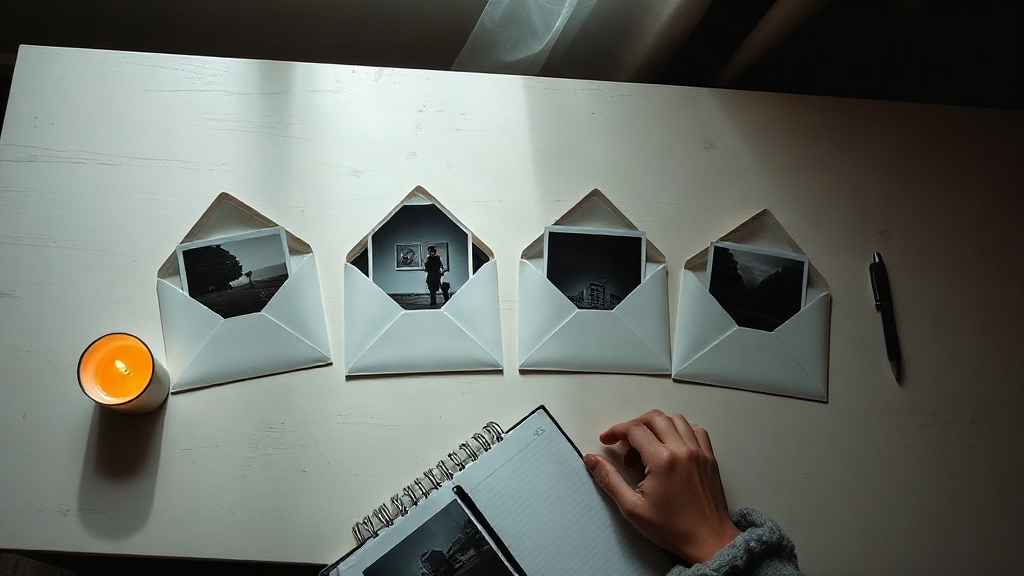
- Week 3, test: ask a friend to pick 1 of 4 photos in a sealed envelope. Meditate 15 minutes, then choose. Guessing wins 25% of the time, so track your hits over at least 20 tries.
- Week 4, review: mark each impression as a hit, a miss, or too vague to judge. Notice which feelings in your body came before the hits.
Why write first? Memory quietly edits itself. We remember the 1 hunch that came true and forget the 9 that didn’t. Writing ahead of time is the kindest form of honesty you can give yourself.
If your photo hits land near 25%, that’s useful, not disappointing. Many people find their body-based hunches about people grow far more accurate while their guesses about distant events stay at chance. That tells you exactly where your gift lives.
What mistakes hold people back?
The biggest mistakes are chasing experiences, skipping the basics, and trusting every impression without checking it. Each one is easy to correct once you see it.
- Chasing visions: grasping makes the mind tense. Sit for peace and let impressions come on their own.
- Skipping attention training: fancy techniques built on a restless mind produce mostly imagination.
- Acting on unchecked hunches: never make a medical, legal, or money decision from a meditation impression alone.
- Confusing fear with intuition: fear feels urgent and loud, while intuition tends to feel calm and matter-of-fact.
- Isolating: if a practice leaves you anxious, frightened, or detached from daily life, pause it and talk with someone you trust.
A common objection is that checking your impressions shows a lack of faith. The opposite is true. Faith and honesty sit comfortably side by side, and your inner voice grows more trustworthy each time you listen and then look.
Frequently asked questions
How can you tell if someone has psychic abilities?
There’s no reliable test that proves psychic ability, and claims should be checked against chance. Write predictions down in advance, make them specific, and compare the hit rate to what guessing would produce. Vague statements that fit almost anyone don’t count as evidence.
What powers come with being psychic?
Traditions describe clairvoyance (inner seeing), clairaudience (inner hearing), clairsentience (feeling), and precognition (sensing the future). None of these has been proven in controlled research, while the related skills of intuition and empathy clearly grow with meditation.
What does God say about psychic abilities?
The Bible forbids divination and consulting mediums in Deuteronomy 18:10-12, while 1 Corinthians 12 describes spiritual gifts such as wisdom, knowledge, and prophecy given by the Spirit. Many Christians draw the line between seeking hidden knowledge on your own and receiving guidance through prayer.
How long should I meditate to strengthen my intuition?
Start with 10 minutes a day for 4 weeks. Most people notice calmer, clearer hunches within that time, and consistency matters more than long sessions.
Is it safe to meditate for psychic development?
For most people, yes, as long as you keep sessions moderate and stay grounded in daily life. If you have a history of trauma or mental illness, or a practice leaves you anxious or disoriented, pause and talk with a qualified professional.
If you’d like a gentle companion for this practice, you’re warmly invited to receive a free daily message from the universe, along with a guided abundance meditation, to help you begin each morning in stillness. Get your free daily message and abundance meditation here, and let the quiet show you what you already know.