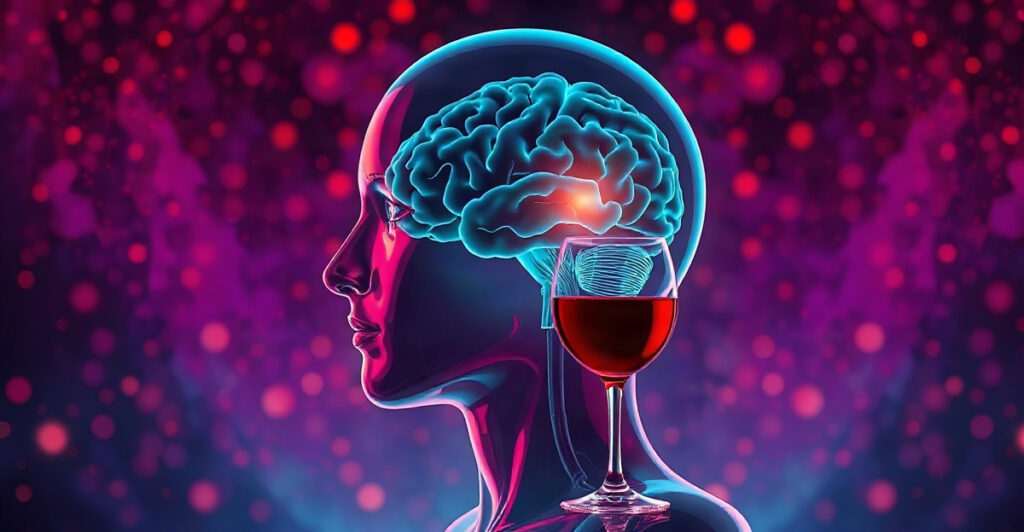
Ask most people whether a glass of wine with dinner hurts the brain, and you’ll hear the same answer: “Only if you overdo it.”
That belief has been around for a long time, and it feels reasonable. Heavy drinking clearly harms the brain. A drink or two surely can’t be the same thing.
A large recent study took a closer look. What it found is worth knowing, not to scare you, but because it changes how you might think about that nightly glass.
What 35,000 Brain Scans Showed
Researchers in the United Kingdom looked at the brains of more than 35,000 healthy middle-aged and older adults and compared them with how much each person drank.
Your brain has two main kinds of tissue. Gray matter is where nerve cells live. White matter is the network of wiring between them, wrapped in fat so signals travel fast.
The finding: even people who averaged one or two drinks a day showed thinning in the outer layer of the brain, the part that handles memory, planning and thinking. The more people drank, the more shrinkage showed up in both gray and white matter.
Keep the numbers in perspective. One or two drinks a day on average could mean one drink nightly, or seven on a Friday. Many people land in that range. The study doesn’t say everyone who drinks will have a problem. It says that even light drinking was linked to measurable changes, and that heavier drinking, around 12 to 24 drinks a week or more, clearly harms the brain.
Why You Get Loud and Loose After a Drink
Think about the first twenty minutes of any party where drinks are flowing. Voices get louder. People wave their hands, stand up, sit down, start dancing. Nobody notices they’re shouting until they step outside.
That’s alcohol quieting the front of your brain, the area behind your forehead that handles planning and self-control. It normally acts like a set of brakes, calming the parts of the brain that drive impulses. When the brakes ease off, you say what you’re thinking and do what you feel like doing, with less thought about how it will land.
The brain areas that help you weigh options, like “I could say this or that, and this way would be kinder,” go quiet too. That’s why drunk conversations can get blunt fast.
It also explains the sore throat the next day. Sometimes it’s not a bug at all. You were just shouting all night.
Your Habits Get Stronger, Even When You’re Sober
The brakes don’t only loosen while you’re drinking.
Someone who drinks regularly, even only on Thursdays or only on Saturdays, can see lasting changes in the brain’s habit circuits. The connections that run automatic, well-practiced behavior grow stronger. The connections that help you pause and choose get weaker.
In plain terms, a regular drinking routine can make you a bit more impulsive and a bit more run by habit on the days when you’re not drinking at all.
It doesn’t take heavy drinking for this to start. A steady weekly pattern is enough to begin nudging things.
Memory Takes a Hit Too
Alcohol also quiets the brain circuits that record new memories. That’s why people forget parts of a night out.
A full blackout is different from passing out. In a blackout, a person stays awake, talks, laughs, even walks or drives home, but the brain isn’t saving any of it. The next day, whole stretches are simply missing.
Some people stay peppy and energetic the more they drink, while most feel sleepy after a few drinks. The people who keep going strong are often the ones with a higher natural risk of developing a drinking problem. If you’ve had several blackouts, or if you tend to feel more alert the more you drink, it’s worth taking that seriously.
What About the Red Wine Health Claim?
You’ve probably heard that red wine is good for you because it contains resveratrol, a natural compound found in grape skins.
Researchers are still debating whether resveratrol is even helpful for people. And even if it is, you’d have to drink an enormous amount of red wine to get a useful dose, so much that the harm from the alcohol would likely cancel out any benefit. Scientists who study this very compound agree on that point.
Some studies of very low red wine intake, around one to four small glasses a week, hint at possible perks, maybe from relaxation or other plant compounds. But that evidence is thin and not settled. It’s not a reason to start drinking, and it isn’t a reason to feel guilty about a glass now and then.

The Good News: Brains Can Bounce Back
The brain is built to change. When someone stops drinking for about two to six months, the habit and impulse circuits tend to move back toward normal. People who drank heavily for many years may not recover fully, but the brain still improves.
That means what you do from here matters more than what you did in the past. A few simple steps:
- Know your number. Count your drinks across a normal week. Many people are surprised.
- Spread out the drinks with free days. Even a few alcohol-free days a week gives your system room to settle.
- Pick your moments. Save drinks for times you truly enjoy, not for routine or stress relief.
- Take a longer break once in a while. A few months off gives the brain’s circuits time to reset.
- Watch your own signals. Strong cravings, blackouts, or feeling more energized the more you drink are signs to talk with a doctor or counselor.
- Help young people wait. People who begin drinking young are far more likely to develop a drinking problem later, even without a family history. Waiting matters.
Small Choices, Real Effects
Nobody needs to panic over a drink at a wedding or a glass of wine at a birthday dinner. A drink every few weeks is very unlikely to cause a problem for most adults.
The point is simply this: regular drinking, even at modest levels, leaves a mark on the brain, and the brain is flexible enough to heal when you give it the chance.
Today, take two minutes and write down how many drinks you had in the past seven days. No judgment. Just the number. Then pick one thing from the list above to try this week. Knowing your number is the first step to choosing it on purpose.