
The best affirmations for kids are short, concrete, and said at the moments they matter: “I can try again” before homework, “I am a good friend” before school, “Mistakes help me grow” after a meltdown. Children under about seven are in the years when self-talk is being written for the first time, which is why a daily affirmation habit lands so deep at this age. Below are 60 affirmations sorted by age group and by the moments kids actually face, plus how to make the practice fun enough that your child asks for it.
Do affirmations work for children?
Yes, and arguably better than for adults: kids are still forming their inner voice, so repeated positive self-talk becomes the default voice instead of having to fight an existing negative one. Developmental research gives this a strong footing. Children aged roughly three to seven are in what psychologists call the emergent-self years, when self-concept is assembled from what the important adults around them reflect back. Repeating “I am kind, I am strong, I can do hard things” in that window is not positive thinking layered over a fixed identity; it is material going directly into the construction.
Two findings are worth knowing as a parent. First, affirmation-style self-talk measurably helps children persist through frustration: kids who use encouraging self-speech keep trying longer at difficult tasks. Second, the believability rule from adult practice applies in kid form: a statement that feels false to the child bounces off. “I never make mistakes” fails; “Mistakes help me grow” works, because the child can verify it in their own experience. This is the same edge-of-believable principle from our confidence affirmations guide, translated for smaller people.
How do you do affirmations with kids?
Keep it short, playful, and tied to real moments: two or three affirmations at breakfast or bedtime, done with actions, works better than a long recited list. The methods parents report working best:
| Method | Ages | How it works |
|---|---|---|
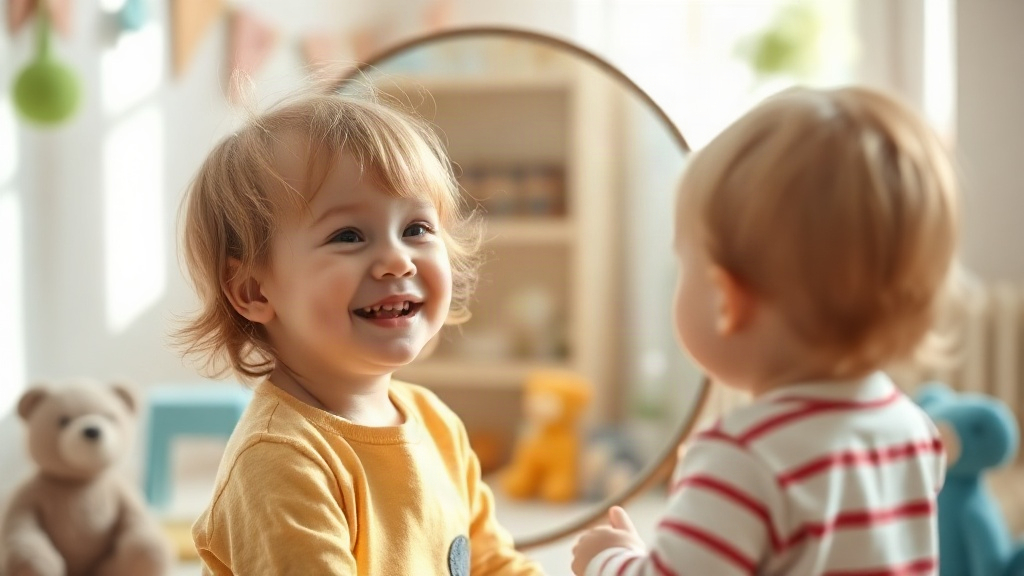
| Mirror mirror | 3-8 | Say 2-3 affirmations to your reflection together, silly voices welcome |
| High-five hand | 4-10 | Trace the hand on paper, one affirmation per finger, high-five each on the way out |
| Breakfast two | 5-12 | Each person (parents included) picks two at the table |
| Bedtime echo | 3-10 | You say it, child echoes it, lights out on a brave sentence |
| Pocket card | 7-13 | One affirmation on a card in the backpack for test days |
Two rules make any of these stick. Parents do it too: children copy what you model, so an adult saying “I can do hard things” before a work call teaches more than a month of instructions. And use the moment-based affirmations below at the actual moment, not just in the routine; the affirmation before the spelling test is the one that gets tested.
How do you start the habit? A first-week plan
Start with the mirror method and two affirmations, add one building block every few days, and let the child choose by day five. Here is what the first week can look like with a four-to-eight-year-old:
| Day | What you do | Why |
|---|---|---|
| Day 1 | You pick two (“I am loved,” “I can do hard things”), say them at breakfast, child echoes | Models the ritual before asking for buy-in |
| Day 2 | Add the high-five: child high-fives your hand on each affirmation | Movement anchors memory for young kids |
| Day 3 | Move it to the bathroom mirror before school | Meeting their own eyes is the confidence rep |
| Day 4 | Add the bedtime echo: one brave sentence before lights out | Books the practice twice a day without doubling the time |
| Day 5 | Child picks their own two from the lists above | Chosen affirmations are the ones kids keep using |
| Days 6-7 | Deploy a moment-based one for a real event (test, game, sleepover) | Connects the words to the moments they are for |
Expect silliness, and welcome it. A child who delivers “I am brave” in a robot voice is still hearing “I am brave” in their own voice, and play is the language young children believe in. The routine that survives is the one that makes them laugh on day forty, not the one that was perfectly serious on day one.
What about teenagers?
Teens reject affirmations that sound parental, so trade the sing-song voice for honest, grounded statements about effort, identity, and choices. The practice still works at thirteen, but the delivery changes: no echoing, no mirror theatrics, and a hard limit on anything that sounds like a poster. Statements like these survive a teenager’s filter:
- I am allowed to figure myself out.
- My worth is not my follower count.
- I can be a work in progress and still take myself seriously.
- Comparison is a bad narrator, and I do not have to listen.
- I choose people who choose me.
- One bad day does not define my story.
- I am building skills my future self will use.
- Saying no is a complete sentence.
- I am the one steering, even when the map changes.
The best window for teen affirmations is not the morning routine but the pre-game, pre-test, pre-audition moment, ideally on a pocket card or a note on their phone lock screen. One sentence at the door of the hard room is worth a poster on the bedroom wall, and the fact that it is their sentence, not yours, is what lets it in.
15 morning affirmations for young kids (ages 3 to 7)
The starter set: simple enough to echo, concrete enough to picture.
- I am loved.
- I am kind.
- I am strong.
- I am brave.
- I am a good friend.
- I can do hard things.
- I am safe.
- My smile makes people happy.
- I am a great helper.
- I learn new things every day.
- I am proud of me.
- Today is going to be a good day.
- I share and I care.
- My feelings are okay.
- I am growing bigger and kinder every day.
15 school and confidence affirmations for older kids (ages 8 to 12)
For the years when comparison, grades, and friendships get complicated, the affirmations grow up too.
- I am smart in my own way.
- Mistakes help me grow.
- I can try again.
- My best is always enough.
- I do not give up when it gets hard.
- My ideas are worth sharing.
- I am more than a grade.
- I choose friends who are kind to me.
- I can be nervous and still do it.
- Asking for help is smart.
- I am proud of how hard I try.
- What others think of me is not my business.
- I am allowed to say no.
- I improve a little every day.
- I believe in me, even on hard days.
15 calming affirmations for big feelings
For tantrums, worries, and wobbly moments, these give a child words to hold onto while the wave passes.
- I am safe right now.
- This feeling will pass.
- I can breathe slowly: in like a balloon, out like a sigh.
- Big feelings are allowed, and they do not scare me.
- I am calm like water.
- I am bigger than my worry.
- It is okay to cry; my body is letting feelings out.
- I can ask for a hug.
- Tomorrow is a fresh start.
- I have felt this before, and it got better.
- My body knows how to calm down.
- I am not my anger; I am the one watching it.
- One slow breath at a time.
- I am loved even on my grumpiest days.
- This is hard, and I can do hard things.
15 bedtime and self-worth affirmations
The last voice a child hears at night is the one their mind keeps, so close the day warmly.
- I am enough, exactly as I am.
- I am loved no matter what happened today.
- Tomorrow, I get to try again.
- I forgive myself for today’s wobbles.
- Good things are coming my way.
- My heart is kind.
- I am thankful for three things from today.
- I made someone smile today.
- I am special just for being me.
- My dreams are safe with me.
- I did my best today, and that was enough.
- Sleep will make me strong for tomorrow.
- I am surrounded by love.
- There is only one me, and that is wonderful.
- I cannot wait to see what tomorrow teaches me.
Frequently asked questions
What age should kids start affirmations?
Around three, as soon as a child can echo short phrases, is a great start. At that age affirmations work through repetition and warmth rather than understanding, and by five or six most children can choose their own from a list, which doubles the buy-in.
How long should kids do affirmations each day?
One to three minutes. Two or three affirmations at breakfast or bedtime beats a long recital; the practice for children is about warmth and repetition, not volume, and short keeps it fun enough that they ask for it.
What if my child says an affirmation is not true?
Shrink the statement until it is true enough: “I am brave” becomes “I am learning to be brave,” or “I am brave when it matters.” Children, like adults, reject claims that clash too hard with experience, and the smaller honest version is the one that gets in.
Should parents do affirmations too?
Yes. Children build their inner voice largely from modeling, and a parent who says “I can do hard things” before a tough day demonstrates that self-talk is a real tool, not a kid ritual. Doing your two alongside theirs is the single strongest predictor the habit survives.
Can affirmations replace teaching good behavior?
No, and they are not meant to. Affirmations support the inner voice; they work alongside modeling, boundaries, and connection. Think of them as the soundtrack of a healthy environment, not a substitute for one.
Confident kids become confident adults, and it starts with a sentence a day. To keep your own morning aligned while you raise them, get a free “message from the universe” in your inbox every morning, plus the abundance meditation.