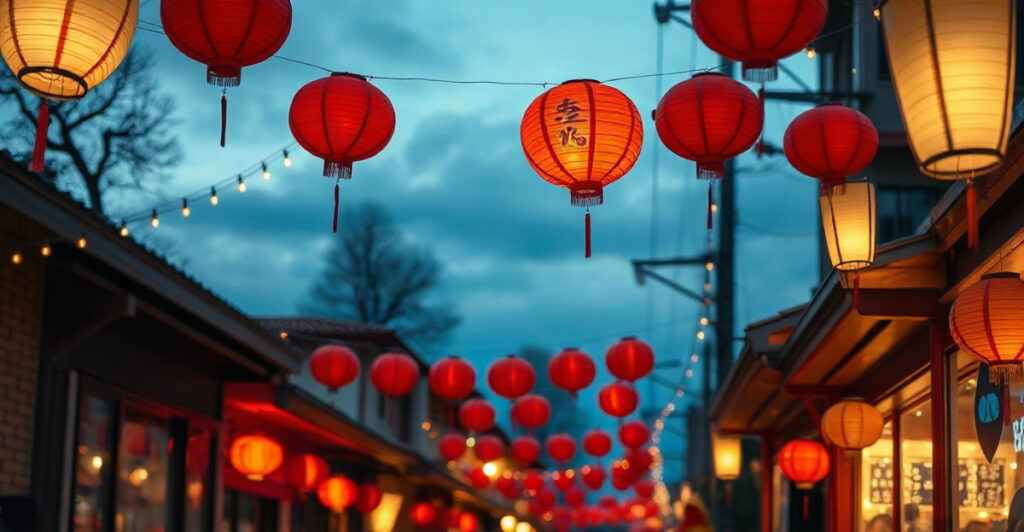
- What it is: Chinese New Year, also called Lunar New Year or the Spring Festival, the biggest holiday in the Chinese world. Its heart is family.
- When: the first day of the first lunar month, which falls between about January 21 and February 20, so the date changes every year.
- The customs: cleaning out bad luck, the reunion dinner, red envelopes, new clothes, red decorations, fireworks and lion dances.
- How long: about two weeks, from New Year’s Day to the Lantern Festival on the 15th day.
What is Chinese New Year, and when is it?
The largest holiday in the Chinese world is the celebration of the Lunar New Year, also called the Spring Festival, falls somewhere between late January and the middle of February. It always falls on the first day of the first month of the lunar calendar, and because it follows the moon as well as the sun, it doesn’t take place on the same date every year. The first day of the Chinese New Year begins with the new moon. At the first full moon of the year, about two weeks later, the celebration reaches its height with the Lantern Festival, which marks the end of the New Year season.
The heart of the Lunar New Year is family. In the days leading up to the New Year, most families thoroughly clean their homes from top to bottom. This sweeps out the bad luck from the old year and makes room for the good luck of the new year to enter. The holiday is a time for people to leave behind the things that have caused difficulty or unhappiness and to make a fresh start.
It is a time for forgiveness and peacemaking, a time to visit family and friends, a time to enjoy delicious food, and a time to wish everyone around you prosperity and good luck. On New Year’s Eve, families gather for a large feast, similar in many ways to Thanksgiving dinner in the United States. Many traditions are part of the celebration. Firecrackers are set off because their loud noises are thought to scare away bad luck and evil spirits.
Dragon and lion dances are performed for the same reason. Children are given bright red envelopes with money inside for good luck. Red is the color of good fortune and happiness, and during the Lunar New Year, red decorations can be seen everywhere. Streets are hung with bright red lanterns.
Red scrolls, or chunlian, with poetic verses expressing good wishes are hung around doorways. Beautiful paintings of gods who protect the household are placed on doors, and vases of fresh flowers are placed in homes to symbolize life and rebirth.
| Question | Answer |
|---|---|
| Other names | Lunar New Year, the Spring Festival |
| When is it? | The first day of the first lunar month, between about January 21 and February 20 |
| Why does the date change? | It follows the moon as well as the sun, so it falls on a different date each year |
| When does the season end? | At the first full moon, with the Lantern Festival |
What is the legend of Nian?
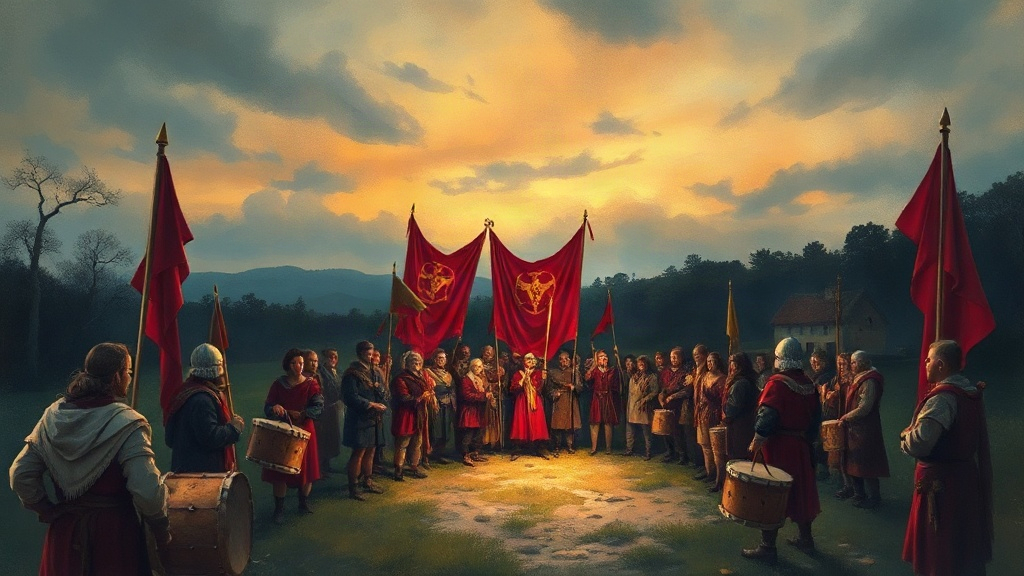
The word Nian in Chinese means year, and there’s a legend that on the last night of winter, on the end of winter, there was a beast, and its name was Nian. That’s what the legend is about, and this was an awful, terrible, scary, frightening beast that would come, and the villagers didn’t know how to deal with it, because it was so terrifying, and they had to face it, and year after year it was always coming back. But over time, the legend says that the villagers got together and they figured out that if they came together as a village and they used certain principles, that they didn’t have to be afraid of this beast any longer, and they learned over time that the beast was frightened of the color red. They learned that the beast was also frightened of loud noise.
And as time went by and more people talked about it, they all began to implement these ideas, so that they knew that they had it within them to overpower this beast that they had been so frightened of in the past. And so even to this day, as the spring festival rolls around, people will often write various verses on pieces of red paper, because the paper, the red paper symbolizes something that people have finally learned to overcome. You see what I mean? It’s like, I can write something out on a piece of paper, and I don’t have to be afraid of my own shadow anymore.
I don’t have to fear what was frightening to me before. I have found something that will help me to overcome it. And people even to this day will take red paper and they’ll write various little verses, maybe perhaps things that they’ve been afraid of in the past, and we see people wearing the color red, and we see people being together, and we see people being joyful, and we see people throwing firecrackers. This is why the loud noises, you see, the loud noise is a symbol that says I don’t have to be afraid.
And every legend, of course, has its roots in reality, and it’s a way of saying, as a culture, as a family, as a group of people, we can face the things that have frightened us in the past, and we can find a way to deal with them and move beyond them.
What do the Chinese New Year customs mean?
There are several customs that take place on Chinese New Year’s, things that you might not be aware of, but as I speak about each of these customs, they’re things that you can practice in your life, on Chinese New Year’s and also as a symbolic thing that can take place in your life anytime you feel the calling. There’s a wish behind each of these customs. The first one is called cleaning out the bad luck. We’ve heard of the term spring cleaning, and it may have originated with the Chinese New Year.
It means that you symbolically take everything out of your home, everything that you can, and you clean everything. And it symbolizes that if there is anything negative, anything depressing, anything upsetting, any bad luck that has been taking place in your home, you are doing everything that you can to symbolize to yourself and to everyone around you that I want to clean this up. The second is making room for the good. So it’s not only just cleaning it up, but it’s making room, moving things around, putting things in different places, symbolizing that good luck, that harmony, that cooperation, that peace can now inhabit.
I’m inviting this into my life, and this is what we do on the first day of the year. The third is called the reunion dinner. And on this particular day, we symbol, we don’t just eat and sit, but we come together, and everybody comes together. If they can possibly make it, they come from wherever they are, and there is a symbolism that we are a family and we are eating together and we are all unified, and if there’s any differences among any of us, we want to symbolic, even if it’s the most minor of things, we want to erase them on this first day, so that we can have 354 more such days ahead of us.
The fourth is called the red envelopes. It’s giving to other people, giving money, if you will, to those that we care about. And it doesn’t matter how much or what, but it’s symbolic that you matter to me and I am giving to you. It’s children particularly on Chinese New Year’s.
And the final is wearing new clothes. It symbolizes that there’s a new you on the first day of the year. This is who I am clean, I am fresh, and we are together, we are making room for the good, we are cleaning out the bad luck, and we are wearing new clothes.
| Custom | The wish behind it |
|---|---|
| Cleaning out the bad luck | Sweeping away the old year’s troubles |
| Making room for the good | Inviting harmony and peace in |
| The reunion dinner | Coming together as one family and letting go of old differences |
| Red envelopes | You matter to me, so I give to you |
| New clothes | A new you for a new year |
| Red decorations, fireworks and lion dances | Good fortune and driving away bad luck |
What do the foods of Chinese New Year stand for?
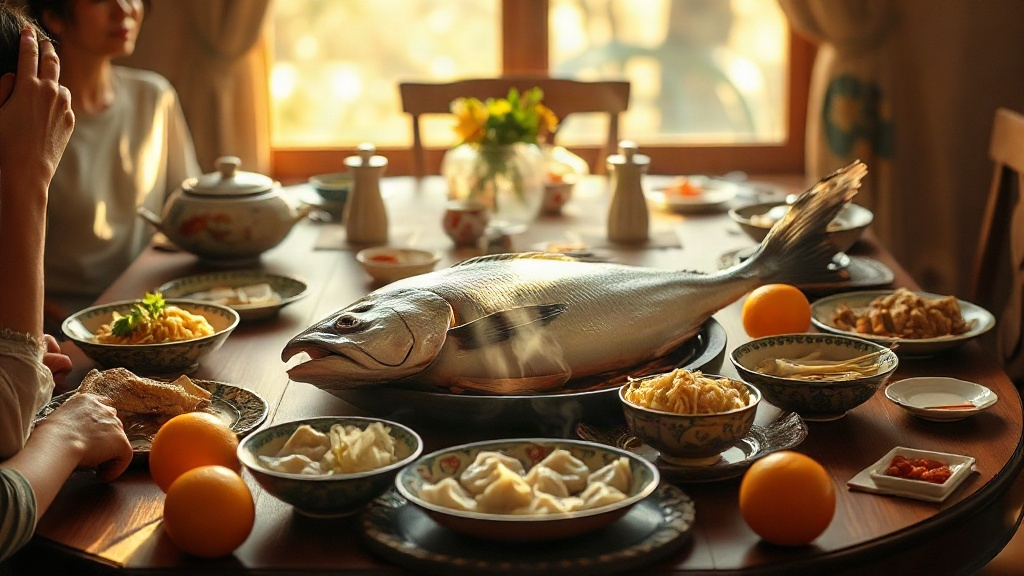
In addition, certain foods carry meanings because of the sounds of their names. Fish sounds like the word for plenty, and so fish on the table symbolizes the wish for a surplus from year to year. Dumplings are shaped like old-style silver ingots, so they symbolize wealth, and long noodles symbolize long life, so they’re not cut but served whole. Some words are associated with certain things because of the sounds of their names.
Some foods are associated with certain things because of their color or appearance. For instance, oranges and kumquats are the color of gold and are used to symbolize prosperity. At the center of the table is a round plate filled with eight different types of appetizers. Eight is a lucky number for the Chinese because of the way it’s pronounced.
Each of these different appetizers has its own symbolic meaning, such as longevity, prosperity, many children, and strong family ties. When the children come to the table, they see immediately that this is a special meal. The symbolic meanings of the foods are discussed around the table, and they realize that the meal is actually a prayer that they can taste.
| Food | What it stands for |
|---|---|
| Fish | The word sounds like plenty, a wish for a surplus each year |
| Dumplings | Shaped like old silver ingots, they stand for wealth |
| Long noodles | Long life, so they are served whole and not cut |
| Oranges and kumquats | Their golden color stands for prosperity |
| Eight appetizers | Eight is a lucky number, and each dish carries a wish such as longevity or family ties |
How long does the festival last, and what are the taboos?
Then on the first day of the new year, the first day, you wake up. Everybody gets up early, they wear new clothes, and they make rounds to pay respects to all of their relatives. They go visiting, and they say, “Happy New Year.” That goes on the first day, but actually this spring festival goes on for a longer period of time, for some as much as two weeks, because on the 15th day of the first lunar month is the lantern festival, when people hang up lanterns in front of their doors and eat something called yuanxiao, which are small round sweet dumplings that are made with glutinous rice flour, and this eating of yuanxiao is a symbol of togetherness.
And that is on the 15th day. So, from the first day to the 15th day is a celebration. And there are all of these little taboos that take place during this time, like sweeping on New Year’s Day, for instance. If you sweep, that’s not considered to be a symbol of good fortune, because you might be sweeping away some of the good fortune that’s coming in from the new year.
So that’s just a little taboo. Now there are some of these taboos, some of these things that you may do and some of these things that you may not do. But if you just go through and understand what those general ideas are and what it is that you want to do, I think you’ll do fine. It’s like any kind of spiritual practice.
If you find yourself so caught up in the rules, you forget what the intention is of your practice.
| Day | What happens |
|---|---|
| New Year’s Day | People wear new clothes, visit relatives and say “Happy New Year” |
| The days between | Visits, meals and celebrations continue |
| The 15th day | The Lantern Festival: lanterns are hung and sweet round dumplings (yuanxiao) are eaten as a symbol of togetherness |
| A common taboo | Do not sweep on New Year’s Day, in case you sweep away good fortune |
How do other lands keep it, and how can you celebrate with respect?
Other lands have also given their New Year a different name. In Vietnam, it is called Tet. In Korea, it is called Seollal. In Tibet, it is called Losar.
Even if we do not know its many names, many of us are already familiar with one of the most visible parts of the lunar New Year celebration, the zodiac, and its 12 animals: the rat, ox, tiger, rabbit, dragon, snake, horse, sheep, monkey, rooster, dog, and pig. Each year is represented by one of these animals, and every 12 years, the cycle begins anew. But the lunar New Year is much more than its animals. It is a time for family, friends, and community, a time to start fresh.
While we may celebrate differently, these are values we all hold dear. The lunar New Year can be something we share, and as with many holidays, we can learn to appreciate it as a way to enrich our own lives and deepen our connections with others. How can you celebrate with respect? One of the easiest ways is to learn how to say a greeting in the language of someone who celebrates.
Your effort will always be appreciated, and it’s a great way to start a conversation. You can also share a meal with friends or family. For many, eating together is at the heart of the celebration, and it is a wonderful way to connect with others. Or you can clean your home or office, as this is a traditional way to prepare for the lunar New Year and a great way to start fresh.
Finally, you can give a gift. It does not have to be expensive, but it should come from the heart. Wishing someone a happy new year is something we can all do, no matter what our culture. This holiday is a reminder that we are all connected and that we can find ways to celebrate our diversity together.
It is a time to be hopeful about the future and to believe that we can make a difference in the world.
| Place | Name of the lunar new year |
|---|---|
| Vietnam | Tet |
| Korea | Seollal |
| Tibet | Losar |
The twelve zodiac animals repeat every twelve years: rat, ox, tiger, rabbit, dragon, snake, horse, sheep (or goat), monkey, rooster, dog and pig. To celebrate with respect, learn a greeting such as Xinnian kuaile (Happy New Year), share a meal, clean your home, and give a small gift from the heart. For other fresh starts, see our New Year ritual and Imbolc guides.
Frequently asked questions
What is Chinese New Year?
Chinese New Year, also called Lunar New Year or the Spring Festival, is the biggest holiday in the Chinese world, a time for family, renewal and good wishes.
When is Chinese New Year?
It falls on the first day of the first lunar month, between about January 21 and February 20. The date changes each year because it follows the moon as well as the sun.
What is the legend of Nian?
Nian was a beast that came out on the last night of winter. Villagers learned it feared the color red and loud noise, which is why people use red decorations and firecrackers.
What do the foods of Chinese New Year mean?
Foods carry meanings through the sound of their names. Fish stands for plenty, dumplings for wealth, long noodles for long life, and oranges for prosperity.
How long does Chinese New Year last?
The celebration lasts about two weeks, from New Year’s Day until the Lantern Festival on the 15th day of the first lunar month.
How can I celebrate Chinese New Year with respect?
Learn a greeting, share a meal with friends or family, clean your home, and give a small gift from the heart. Your effort will be appreciated.
Keep noticing the signs
The universe keeps sending you signs. Get one in your inbox every morning, join the free daily message from the universe. New to rituals? Start with our guide to what manifesting is and how it works.
Part of our guide: Astrology, Moon Phases and Seasons: The Complete Guide