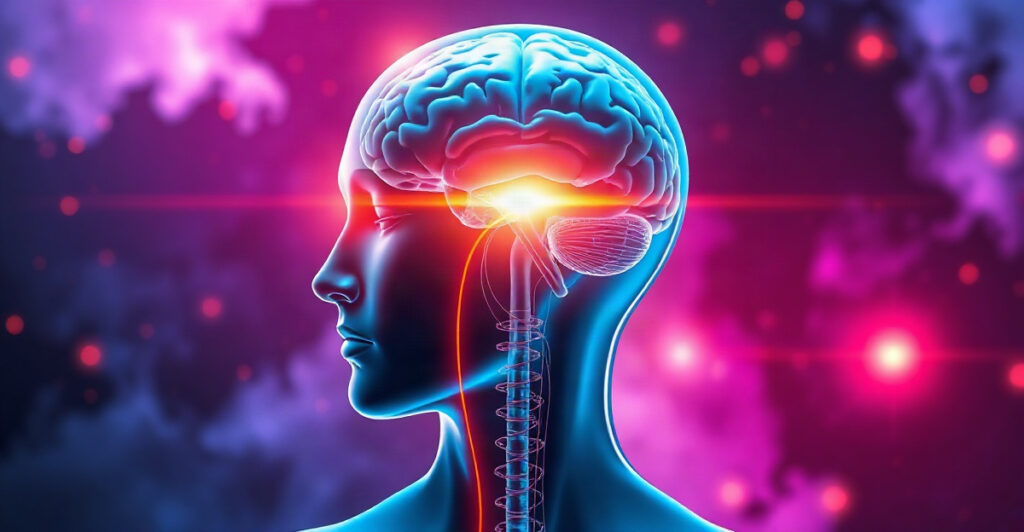
Why finishing something hard feels so good, and how to make that feeling a habit.
Yes, pain and hard effort can trigger dopamine in the brain, though not in the simple “feel good” way most people imagine. Some dopamine cells respond to unpleasant events, and the relief after pain can release dopamine in the brain’s reward center.
Neuroscientist Andrew Huberman raised this point with David Goggins on the Huberman Lab podcast. He said dopamine is badly understood, and that pain also feeds into it. Here’s what that means in plain words, and how you can use it to make hard things a little easier to choose.
What is dopamine, really?
Dopamine is a brain chemical that drives wanting, motivation, and learning, more than pleasure itself. It tells your brain, “This matters. Pay attention. Go after it.”
A widely cited review by Siri Leknes and Irene Tracey at Oxford, published in Nature Reviews Neuroscience, explains that pain and pleasure share much of the same brain wiring. Dopamine tends to drive the “wanting,” while the brain’s natural opioids shape the “liking.”
That’s why scientists now describe dopamine as a signal of importance, more than a reward chemical. Things that feel good matter. So do things that hurt.
Takeaway: think of dopamine as your brain’s “go” signal, not its happiness button.
Does pain itself release dopamine?
Some dopamine cells do respond to pain and other unpleasant events, according to brain research in animals. This surprised scientists who thought dopamine only tracked rewards.
A major 2010 review in Neuron by Ethan Bromberg-Martin, Masayuki Matsumoto, and Okihide Hikosaka showed that dopamine cells come in different types. Some fire for good things. Others fire for anything important, including bad or alarming events. Their job is to wake you up and get you moving.
So when Huberman said “pain releases dopamine,” he was pointing at a real finding. The honest note is that most of this detailed work comes from animal studies, and the exact picture in people is still being worked out.
Why does finishing something hard feel so good?
Finishing something hard feels good partly because relief from discomfort releases dopamine in the brain’s reward center. The ending of pain is itself a reward.
In a 2012 study in PNAS, Edita Navratilova, Frank Porreca, and their team showed that when pain was relieved in rats, dopamine rose in the nucleus accumbens, a key reward area. The rats also learned to prefer the place where relief happened.
You’ve felt a human version of this. Think of stepping out of a cold lake, crossing the finish line of a long run, or hitting “send” on a scary email. That rush of lightness is real brain chemistry, not your imagination.
How to use it: after a hard task, pause for 10 seconds and notice the relief. Letting yourself feel it helps your brain link effort with reward.
Can you train your brain to like hard things?
Yes, research shows people can learn to value effort itself when effort is rewarded over time. This is how discomfort slowly turns into drive.
A 2022 study in PNAS by Georgia Clay and colleagues rewarded some people for trying hard on a memory task. Later, with no reward on offer, those people still chose harder problems more often. They had learned to value effort.
Huberman linked this to the anterior midcingulate cortex, the brain area tied to willpower. He said it connects to the dopamine system and can learn to reward what he called friction. That link is his reading of the research, so hold it as a helpful idea rather than a proven fact.
How is effort dopamine different from easy dopamine?
Effort dopamine comes after you’ve worked for something and tends to build lasting drive, while easy dopamine comes with no effort and tends to leave you wanting more. This table shows the difference.
| Source | Examples | How it feels after | Long-term effect |
|---|---|---|---|
| Easy dopamine | Scrolling, junk food, endless videos | Quick high, then flat or restless | Makes effort feel harder by comparison |
| Earned dopamine | Finishing a workout, solving a hard problem | Calm pride and relief | Teaches your brain that effort pays |
| Relief dopamine | End of a cold shower, a hard talk done | Lightness and release | Links discomfort with a good ending |
| Social dopamine | Likes, praise, a pat on the back | Warm, but fades fast | Helpful, but can make you depend on others |
Goggins spoke to that last row. He said he trained almost entirely alone and learned to create his own drive from the work he’d done, rather than waiting for praise. Praise is still lovely. Your own proof simply lasts longer.
How do you use this to reach your goals?
Use it by pairing daily hard tasks with a moment of noticed relief and a small reward, so your brain learns that effort is worth it. Here’s a simple 4-step practice.
- Pick 1 uncomfortable task. Something short, like a cold rinse or a tough 10-minute study block.
- Do it without a phone break. Easy dopamine in the middle weakens the lesson.
- Feel the relief. When you finish, stop for 10 seconds. Breathe. Notice the lightness.
- Mark it. Write 1 line in a journal or add a check to a calendar. That small reward seals the link.
Want more ways to make these practices stick? Our guide to habits that rewire your brain shows the small daily routines backed by neuroscience.
Frequently asked questions
Does pain release dopamine or endorphins?
Both can be involved. Research suggests some dopamine cells respond to painful events and pain relief raises dopamine, while the body’s natural opioids, including endorphins, help ease pain and shape pleasure.
Why do I feel good after a cold shower?
Part of the good feeling likely comes from relief when the discomfort ends, which studies link to dopamine release in the brain’s reward center. Cold water also wakes up your nervous system.
Is dopamine only about pleasure?
No. Dopamine is more about wanting, motivation, and learning what matters. Some dopamine cells respond to unpleasant or alarming events, not just rewards.
Can you get addicted to hard things?
Hard things can become rewarding over time, which is healthy for most people. If effort starts to cause injury or harm your relationships, it’s a sign to rest and get support.
What did Huberman say about pain and dopamine?
On the Huberman Lab podcast with David Goggins, Andrew Huberman said pain has inputs to the brain’s dopamine centers and that the brain can learn to release dopamine in response to effort and friction.
The hard thing you do today is teaching your brain what tomorrow will feel like. The universe keeps sending you signs. Get one in your inbox every morning → To see how this fits into creating the life you want, read our guide on how to manifest.