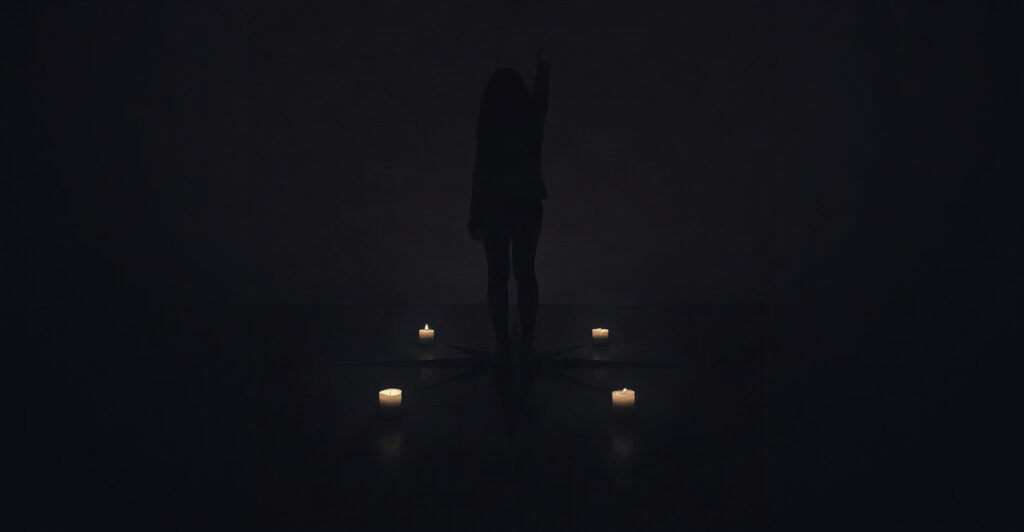
To cast a circle, you cleanse and ground yourself, then walk or point clockwise around your space while stating that you are creating a boundary, call the four directions, and declare the circle sealed. It takes about 5 minutes, needs no tools, and creates a focused, protected space for spellwork, meditation, or manifestation.
This guide covers what casting a circle means, why you would do it, what you need, the full step-by-step method, how to call the quarters, what to do inside, and how to close the circle properly.
What does it mean to cast a circle?
Casting a circle means marking out a temporary sacred space with intention, forming an energetic boundary that holds your focus in and keeps distraction and unwanted energy out. It is a container for the work you are about to do.
The practice is strongly associated with Wicca, where it was formalized in the mid-20th century, but circle casting in some form appears across many magical traditions. Non-Wiccan witches use simpler versions, and The Pagan Grimoire covers several approaches.
The circle is not a physical wall. It is a mental and energetic agreement that “inside this ring, for this hour, I am focused and protected.” That agreement is what makes it work.
Why cast a circle before manifestation or spellwork?
You cast a circle to concentrate your energy, protect the working from interference, and mark a clear start and end so the ritual feels separate from ordinary life.
- Focus: the boundary keeps your attention from wandering, the way closing a door helps you concentrate.
- Protection: it sets the intention that only energy aligned with your purpose is welcome inside.
- Containment: it holds the energy you raise until you are ready to release it toward your goal.
- Ritual framing: stepping in and out signals to your mind that something deliberate is happening.
A real example: someone doing a manifestation candle ritual keeps getting distracted by their phone and household noise. They cast a simple circle first, phone off, and find they can hold the visualization for the full 10 minutes instead of 2. The circle did not add power. It removed leaks.
Takeaway: a circle is optional for small work, but it noticeably sharpens focus for anything that needs sustained attention.

What do you need to cast a circle?
You need nothing but your intention and your hand. Tools are optional and can be swapped for household items.
| Tool | Role in casting | Substitute |
|---|---|---|
| Athame or wand | Directs energy as you draw the circle | Your index finger |
| Salt | Marks and purifies the boundary | Sprinkle a thin line, or skip it |
| 4 candles or objects | Mark the north, east, south, and west points | A stone, a cup, a feather, a coin |
| Incense | Cleanses the space first | Open a window and visualize clearing |
| Bell | Opens and closes the rite | Clap once, or say the words only |
A finger, a clear intention, and 5 quiet minutes are a complete kit. Everything else is preference.
How do you cast a circle step by step?
To cast a circle, clean the space, ground yourself, define the edge, walk clockwise while stating your intention, call the four quarters, then declare the circle cast.
- Clean and cleanse. Tidy the area, then pass incense over it or visualize white light clearing the space.
- Ground and center. Feet flat, several slow breaths, until you feel steady and present.
- Decide the edge. Pick where the circle runs, big enough to sit or move in. Face north or east to start.
- Walk it clockwise. Move deosil (clockwise) around the edge, arm out, finger or tool pointing at the boundary. Picture a line of light following your hand.
- State the intention as you walk: “I cast this circle to hold my focus and protect this work. Nothing crosses it that is not in service of my purpose.”
- Close the ring. Return to your starting point so the line meets itself.
- Call the quarters (next section), then say: “The circle is cast. I am between the worlds. So it is.”
If you cannot walk the space, point and turn your whole body slowly clockwise from the center instead.
How do you call the 4 quarters?
You call the quarters by facing each direction in turn, starting in the east or north, and inviting that element to guard the circle and lend its quality.
| Direction | Element | What you invite |
|---|---|---|
| East | Air | Clarity, focus, communication |
| South | Fire | Will, energy, courage, drive |
| West | Water | Emotion, intuition, healing |
| North | Earth | Stability, grounding, manifestation |
Face each way and say: “I call on the element of [air], to guard this circle and lend me [clarity]. Be welcome here.” Many traditions add “and Spirit” at the center after the four. Learn more in our guides to the element of air and the element of earth.
What do you do inside the circle?
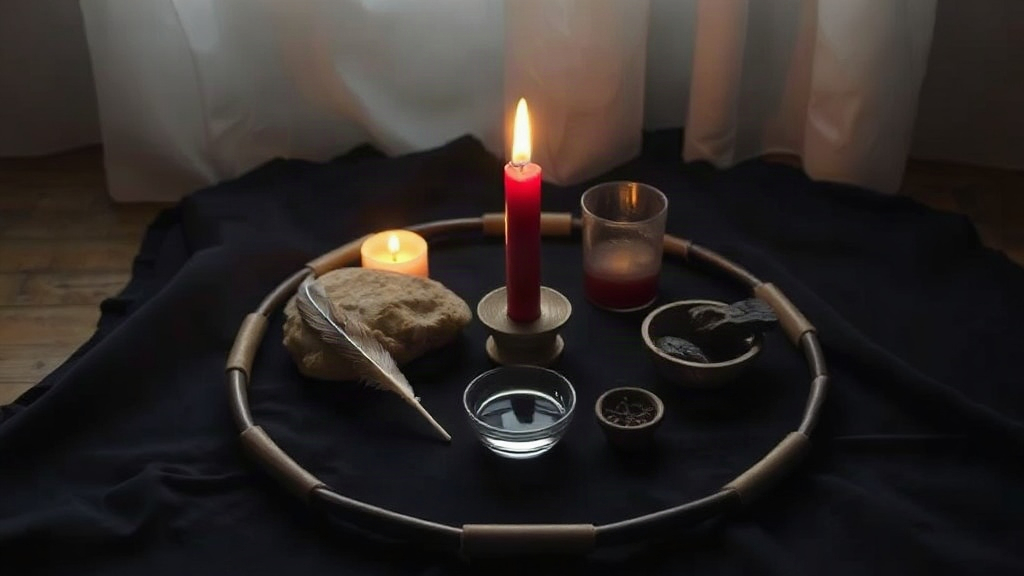
Inside the circle you do the work you cast it for: a spell, a candle ritual, meditation, tarot, journaling, or a manifestation visualization, without leaving until you are done.
- Keep your tools inside before you start, so you do not have to break the circle to fetch something.
- If you must leave, “cut a door” by drawing an opening with your hand, step out, then close and redraw it when you return.
- Raise and release energy toward your goal near the end: build focus and feeling, then let it go with a clear “it is done.”
- Take your time. The circle holds as long as you hold the intention.
A common question is whether the circle “runs out.” It does not have a timer, but your focus does. Most people find 20 to 40 minutes inside is the useful limit before attention fades. If you notice your mind drifting for good, that is the sign to raise your energy, release it toward the goal, and close.
Pair the circle with a focused practice like a manifestation altar session for best effect.
How do you close or open the circle?
You close the circle by thanking the quarters in reverse order, then walking counter-clockwise to draw the boundary back in, and stating that the circle is open.
- Thank the quarters in reverse: north, west, south, east. “Element of earth, thank you for guarding this circle. Go in peace.”
- Walk counter-clockwise (widdershins) around the edge, drawing the light back into your hand or tool.
- Declare it open: “The circle is open but unbroken. Merry meet, merry part, merry meet again,” or simply “The circle is open. It is done.”
- Ground again. Press your hands to the floor, eat or drink something small, and put your tools away.
Always close a circle you have cast. Leaving one open feels unfinished and scattered.
A real example: someone casts a circle for a Sunday night intention-setting ritual, does 15 minutes of journaling and visualization, then gets tired and goes to bed without closing it. They wake up feeling foggy and restless, and the room feels “stuck” for a day. That evening they stand in the same spot, thank the quarters in reverse, walk the edge counter-clockwise, and say the circle is open. The heaviness lifts. Closing takes 2 minutes and it matters as much as the casting.
Common circle casting mistakes
The most common mistakes are forgetting to close the circle, breaking it by walking out mid-ritual, and rushing the grounding at the start and end.
- Not closing it. Always thank the quarters and open the circle, even for a short working.
- Walking out without cutting a door. If you must leave, draw an opening and close it behind you.
- Forgetting your supplies inside. Gather everything before you cast.
- Skipping grounding. Casting while frantic makes the whole rite feel thin. Take the breaths.
- Going the wrong way. Clockwise to cast, counter-clockwise to release, in most traditions.
- Making it too small. Give yourself room to sit and move without crossing the line.
Frequently asked questions
Do you need tools to cast a circle?
No. You can cast a circle with only your intention and your index finger. Tools like an athame, salt, candles, or a bell are traditional aids, but each can be substituted with a household object or skipped entirely.
Which direction do you cast a circle?
You cast a circle clockwise, also called deosil, starting from the north or east. To close the circle at the end, you move counter-clockwise, or widdershins, to draw the boundary back in.
What do you say when casting a circle?
State your purpose as you walk the boundary, such as I cast this circle to hold my focus and protect this work. Then call each direction: I call on the element of air to guard this circle. Finish with The circle is cast. So it is.
How do you close a circle?
Thank the four quarters in reverse order, from north back to east, then walk counter-clockwise around the edge to release the boundary, and say “The circle is open but unbroken.” Ground yourself afterward by touching the floor and having a small snack.
Can you leave a circle once it is cast?
You should not simply walk out. If you must leave, cut a door by drawing an opening in the circle with your hand, step through, then redraw and seal it when you come back. Otherwise the circle is considered broken.
Do you have to be Wiccan to cast a circle?
No. Circle casting was formalized in Wicca but is used by many non-Wiccan witches and practitioners in simplified forms. You can cast a circle as a plain focusing and protection technique without following any specific religion.
Cast one before your next ritual
Next time you do candle work or a manifestation visualization, cast a simple circle first: cleanse, ground, walk the edge clockwise stating your purpose, call the four directions, then begin. Close it the same way in reverse when you finish.
For a daily message to keep your practice grounded, join our free message from the universe and abundance meditation.
You might also like
- Create a Beauty Altar for Aphrodite in 7 Steps
- Low Effort Witchy Makeup Magic: 5-Minute Everyday Glam
- Salts for Manifestation: Magical Uses of Sea Salt and More
- Manifestation Magic for Beginners: Simple Spells That Work
- The Element of Fire for Manifestation: Correspondences
- Rose Water Manifestation Magic and Spiritual Benefits