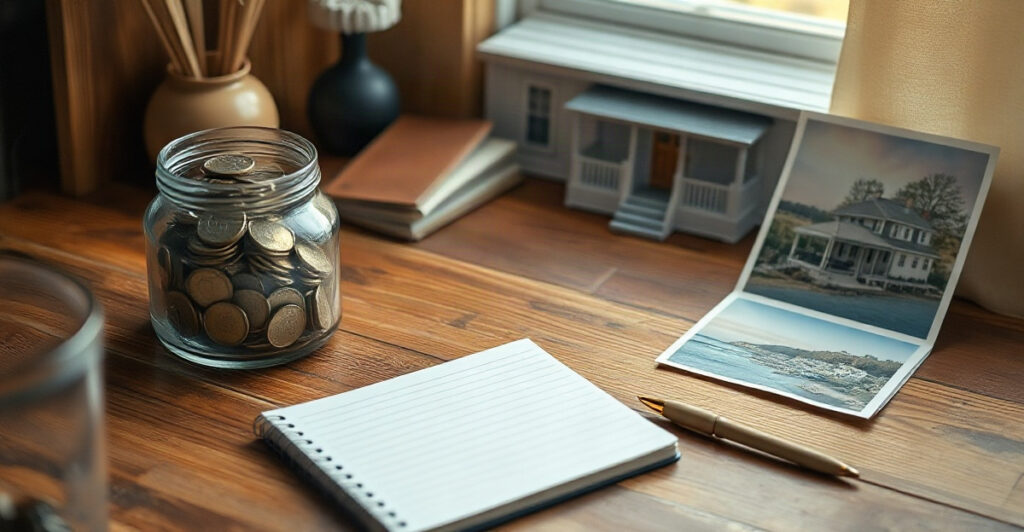
The best money vision board pictures show what your money is for, not just money itself: the home, the trip, the quiet morning with no debt, the person you’ll help. Choose 10 to 15 specific pictures in 5 groups, give each one a one-line caption with an amount and a date, and place them by how soon you want each goal. This guide tells you which pictures to pick, what to type into a search box to find them, which ones to leave off, and where each one belongs on the board.
What are the best pictures for a money vision board?
The best pictures for a money vision board are specific images of what your money will do for you and the people you love, plus one or two pictures of the number itself. A photo of a paid-off front door tells your mind more than a photo of a pile of bills. It gives the money a reason, and reasons are what keep you going when saving feels slow.
This guide is about the pictures. If you want help with the other half, such as setting up accounts and automatic transfers, our guide to a vision board for finances walks through it. Here we stay with the question people search for: which pictures should you choose, and how should you place them?
Here’s a plain test for any picture you’re thinking of adding. Look at it for 5 seconds and ask 3 questions.
- Can I name exactly what it is? “A small blue house with a porch” passes. “Wealth” doesn’t.
- Do I feel something? Relief, warmth, excitement, pride. If you feel nothing, it’s decoration.
- Is it mine? If you want it because someone you follow wants it, it belongs on their board.
A picture that passes all three goes on the board. One that fails any of them goes back in the folder.
What are the 5 types of money pictures?
Money pictures fall into 5 types: pictures of what the money is for, pictures of proof that you’re making progress, pictures of the number, pictures of giving, and pictures of the feeling you want. Most boards lean on one type only, usually cash or luxury items, and wonder why they get bored of it. A board with all 5 gives your mind something to hold at every stage.
| Picture type | Example | Search words to try | What it does |
|---|---|---|---|
| 1. What it’s for | A small house with a porch, a beach town, a classroom | “cozy house porch,” “coastal village street” | Gives the money a reason |
| 2. Proof of progress | A debt thermometer, a savings jar filling up, a paid-in-full stamp | “savings jar coins,” “progress bar” | Lets you see the work paying off |
| 3. The number | Your own handwritten target on a card, or a photo of a check you wrote to yourself | Make it yourself | Turns a wish into an amount |
| 4. Giving | A shared meal, a donation box, a gift for a parent | “community kitchen,” “gift for mom” | Connects money to love |
| 5. The feeling | An open window, a calm kitchen table, a quiet walk | “morning light kitchen,” “relaxed afternoon” | Shows how you’ll feel with no money stress |
If you pick 2 pictures from each type, you land on 10, which is a nice size for a board. Weight them toward what you care about most. A parent saving for a child’s school might use 4 pictures of type 1 and 2 of type 4, and that’s perfectly fine.
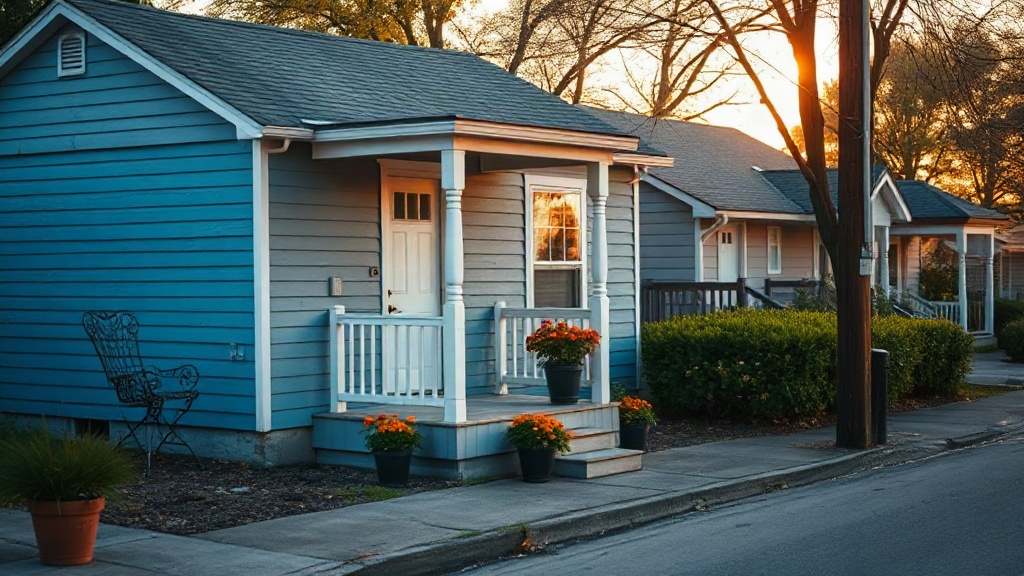
Should you use pictures of cash and luxury items?
Use pictures of cash only if they mean something specific to you, and skip luxury items you don’t truly want. Some guides suggest crisp bills or high-end brands as shorthand for wealth. That works for some people. For many others, a pile of cash is a symbol without a story, and it’s easy to stop seeing it within a week.
Ask what the cash would do. If the answer is “pay off the card and sleep better,” then the picture you want is the card with a line through it, or a quiet bedroom. If the answer is “buy a car I’ve wanted since I was 16,” then the picture is that exact car, and cash adds nothing.
The same goes for luxury. A yacht you’d never sail is a comparison picture. It makes you feel behind. A rowboat on a small lake that you could borrow this summer is a picture that makes you feel ready. Wealth means different things to different people, and your board should show your own meaning.
Which pictures match which money goal?
Match each goal to a picture of the life it creates, then add a small picture of the first action. The Creately guide to money vision boards lists 10 common money goals and pairs each with suggested visuals. I’ve adapted the ideas below and added the second column of small “doing” pictures that most lists skip.
| Money goal | Big picture (what it creates) | Small picture (first step) |
|---|---|---|
| Save for a vacation | The exact beach or mountain town, one activity | A jar with the trip’s name on it |
| Buy a home | The kind of house and street you want | A calendar with a monthly deposit date |
| Pay off debt | A debt thermometer, or a quiet evening with no bills | A highlighter next to a statement |
| Build an emergency fund | A locked front door, an umbrella, a warm lamp | A small savings account card |
| Save for retirement | A porch, a garden, grandchildren at a table | A pen and a retirement account form |
| Buy a car | The exact model and color | A coin jar with a price on it |
| Start a business | Your workspace, your tools, your first customer | A notebook with 3 lines of a plan |
| Pay for education | A campus, a classroom, a graduation cap | A tuition schedule on the fridge |
| Give to others | The cause, the people, a shared meal | A donation envelope |
Creately also suggests writing a goal statement next to each picture, such as a dollar amount and a time frame, and organizing the board in sections by theme like savings, debt reduction and dream purchases. I like that idea, and I’ll show you a tighter version in a moment.
How can you choose a picture that truly means something?
You choose a meaningful picture by asking it questions, because the picture you chose can tell you what you really want. Discover’s financial vision board guide, written with authors Ellen Rogin and Lisa Kueng, suggests asking of each image: where are you, what do you see, how do you feel, who is with you, and what do you smell. The questions bring the picture to life.
The guide shares two examples that show why this works. A client of Rogin’s chose a picture of red theater curtains, and it led one woman to a goal of seeing a Broadway play and another to a goal of supporting a local theater company. Kueng’s husband picked a photo of a dinner table, and talking about it showed him he wanted to spend more time in Los Angeles, which he hadn’t realized before.
That’s the surprise of choosing pictures slowly. Sometimes you pick one for a reason you think you know, and the questions show you a deeper one. If you chose a picture of a house and the answers to the five questions are all about a garden and a table with friends, maybe your goal isn’t a bigger house. Maybe it’s more time with people you love, which costs far less and can start sooner.
Write your answers on the back of each picture, or in a notebook. Five short lines per picture is plenty.
How many pictures should a money vision board have?
A money vision board should end with 10 to 15 pictures, after you start with 20 to 30 and cut. That’s the range Discover’s guide recommends. Starting with more gives you room to choose, and cutting teaches you what matters.
The cutting step works like this. Lay all your pictures on a table. Remove any that fail the 3-question test. Remove pictures that repeat the same idea, keeping the strongest. Then ask whether each remaining picture ties to a real goal in your life. SoFi’s guide puts it simply: ask how each image connects to a goal, then keep the ones that resonate most.
Put the cut pictures in an envelope. Don’t throw them away. Some will fit your next update, and some will stay in the envelope forever, which is fine too. The point is that the board in front of you is a selection, not a pile.
What is the Caption Rule?
The Caption Rule says every picture on your money board gets one line of handwriting with an amount, a date and a next step. It’s the piece I’d keep if I could keep only one tip, because it turns a pretty picture into a promise you can check.
Here’s the format: “[What it is]. $[Amount] by [date]. This month: [one action].” For example:
- Under a picture of a small blue house: “Our porch. $12,000 down payment by next fall. This month: $500 into the house account.”
- Under a debt thermometer: “Card at zero. $2,400 in 12 months. This month: $200 to the card.”
- Under a beach picture: “Seaside week. $1,800 by June. This month: sell one thing I don’t use.”
- Under a donation picture: “Feed 20 neighbors. $300 by December. This month: $25 into the envelope.”
Notice the arithmetic. $2,400 over 12 months is $200 a month. A caption that doesn’t divide into a monthly number is a wish. A caption that does is a plan, and your picture is the reason you keep it.
Write the caption by hand. Handwriting slows you down just enough to be honest. If a number scares you, make the goal smaller or the date later, but don’t skip the caption. A board without captions is a mood. A board with captions is a map.
The Discover guide also suggests writing goals down and saying them aloud. Reading each caption out loud once a week takes about 2 minutes, and it keeps the board alive.
Where should you place each picture on the board?
Place pictures by how soon you want each goal, with the nearest goals at the bottom or left and the farthest at the top or right, and your biggest picture in the center. Discover’s guide offers a 4-box grid for this: the top half holds high-cost goals, the bottom half holds low-cost goals, the left side holds goals within about 5 years, and the right side holds long-term goals. SoFi’s guide suggests grouping by time horizon, short, mid or long term, or even by color.
I like a simpler 3-column version for most people, because it’s easy to read at a glance.
| Column | Time frame | What goes here | Example |
|---|---|---|---|
| Now | Next 3 months | Small wins you can finish quickly | A first $500 in the emergency jar |
| Soon | 3 months to 2 years | The goals you’re actively saving for | The trip, the debt payoff, the car |
| Someday | 2 years and beyond | The big dreams | The home, the business, retirement |
Put your biggest, most feeling-filled picture in the center, usually from the “someday” column, as the anchor. Then place the “now” pictures on the bottom row, where you see them first and finish them first. When a “now” picture is reached, move a “soon” picture down into its place. The board shifts like a staircase as you climb.
Leave empty space between pictures. A crowded board stops being seen. And place a few feeling words, such as “enough,” “free” or “generous,” in the margins.
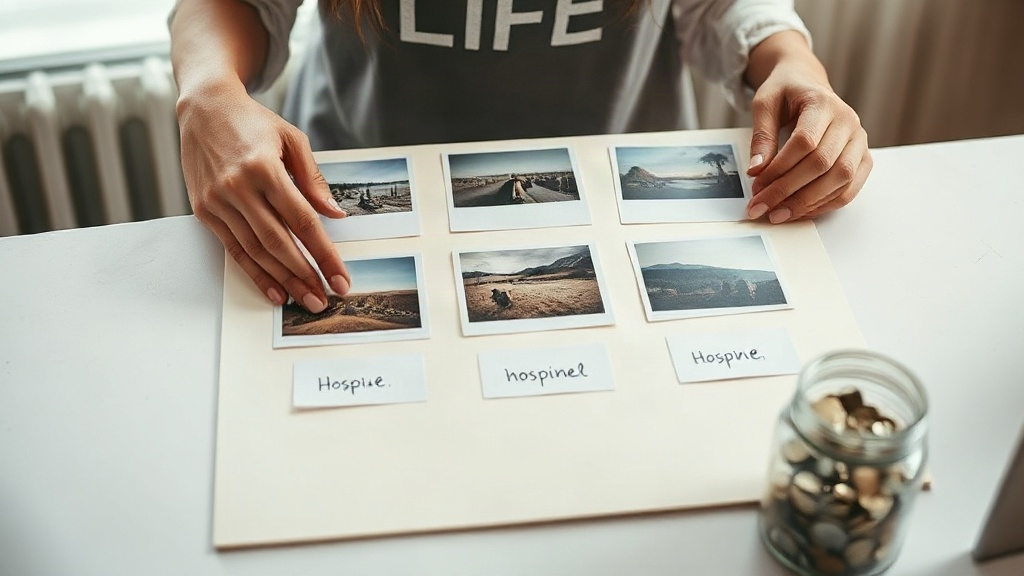
Where can you find money vision board pictures?
You can find money vision board pictures in your own photos, in magazines, on free stock photo sites, in image search and on Pinterest. SoFi’s guide names Pinterest, social media, digital magazines, free stock sites and search engines, and suggests keeping every image in one folder.
The strongest pictures are often the ones you take yourself. Photograph the house you hope to buy from the sidewalk, your own empty savings jar, the front door of the school you want your child to attend, a page of your budget notebook with the goal circled. Real pictures carry real feeling.
For things you can’t photograph, search by exact description, not by the word “wealth.” Try “small blue house porch,” “debt free,” “savings jar coins,” “quiet kitchen morning” or “family dinner table.” Read any free stock site’s license page before you use an image beyond your own private board. For a board that hangs in your bedroom, the risk is low. For a board you post or sell, check the rules first.
You can also make pictures: a card with your target number, a hand-drawn thermometer you color in as you go, a photo of a check you write to your future self with a pretend date. These “number pictures” are type 3, and they’re the easiest to personalize.
For more on choosing pictures across every area of life, not only money, see our guide to vision board pictures.
Should a money vision board be printed or digital?
Print it if you want to slow down and feel your choices, and keep a digital copy as your phone wallpaper so you see it daily. Discover’s guide says a tactile, printed board is more engaging than a digital one, and recommends printing online images if you need to. SoFi notes that digital boards are portable and easy to edit, and that setting the image as a device wallpaper keeps it from being out of sight, out of mind.
A good plan is to do both. Build a printed board with your hands, hang it above your desk or on the fridge, as both guides suggest, then photograph it and set the photo as your lock screen. The printed one gives you the slow thinking. The phone one gives you the many daily glances.
If you want a ready-made layout to start with, our free printable vision board kit has pages you can use right away.
Do money pictures help you reach money goals?
Money pictures can help you stay focused on a goal, but the research says that picturing only the finished result isn’t enough, and sometimes it lowers your energy. The British Psychological Society’s Research Digest reports on 4 experiments by Kappes and Oettingen in which people who indulged in positive fantasies about a desired future showed lower energy, and in one study achieved fewer of their goals over the next week. The researchers suggest that fantasies that also face obstacles may help people muster the energy to act.
A second study points the same direction. An article on the Nir and Far site describes research by Lien Pham and Shelley Taylor at UCLA in which college students who pictured the process of studying did better on the real exam than students who pictured the outcome, an A grade.
What does that mean for your board? Pictures of the finished life are the reason, and pictures of the steps are the road. That’s why the Caption Rule includes a “this month” action, and why the table above has a small picture of a first step for each goal. A picture of a house plus a picture of a monthly deposit is a better pair than the house alone.
Now the honest limit. These studies weren’t about vision boards, and neither proves a board will make you wealthy. A board is a tool for attention. It keeps your chosen goals in front of you while you do the ordinary work of earning, saving and spending with care.
Which pictures should you leave off a money board?
Leave off pictures that make you feel behind, pictures you feel nothing for, and pictures of goals that belong to someone else. A board is supposed to lift you, so any picture that leaves you tight in the chest isn’t doing its job.
- Comparison pictures. Someone else’s yacht, mansion or income screenshot. Replace with your own version of enough.
- Vague pictures. “A beach” is weak. “That small beach where I can walk to a cafe” is strong.
- Fear pictures. Eviction notices and collection letters. Show the relief, not the dread.
- Too many pictures. Past 15, your eye can’t land anywhere.
- Pictures with no amount. Add a caption or take them down.
- Quote-only boards. Words are fine in small doses, but a board of only quotes lacks a destination.
If a picture bothers you, that’s useful information. Ask why. Sometimes it points at a belief about money that needs gentle attention, and that’s worth a quiet 10 minutes in a notebook.
How do you keep your money pictures fresh?
Keep your money pictures fresh by looking at one each day, updating the board every 3 to 6 months, and moving finished goals to a “done” page. SoFi’s guide suggests picking one image each day to focus on, and reviewing the board after reaching a goal, after a major life change like a marriage, a job change or a baby, after a windfall such as a tax refund, and at least a few times a year.
Those are good triggers. Add one more of your own: review the board whenever you get paid. A 60-second look at the board on payday ties the picture to the moment money actually moves.
When you finish a goal, take a photo of the board before you change it. Write the date on the finished picture and place it on a “done” page. Seeing that page grow is one of the best feelings a board can give you. Then replace the finished picture with the next one from your envelope, and celebrate in a way that doesn’t undo the goal. A walk and a favorite meal at home go a long way.
A board should grow with you. Your tastes, your family and your goals will change, and a picture that excited you a year ago may feel flat today. Replace it without guilt.
Frequently asked questions
What pictures should I put on a money vision board?
Put pictures on a money vision board that show what your money will do: the home, the trip, the debt-free evening, the gift to a parent, along with a picture of your own written target amount. Choose specific images over general ones, such as a particular house with a porch instead of a generic mansion.
Aim for 10 to 15 pictures in 5 groups: what it’s for, proof of progress, the number, giving and the feeling. Then add a one-line caption under each with an amount, a date and a next step. A picture without a caption is an idea, while a picture with one is a plan.
Is it okay to use pictures of cash on a money vision board?
Yes, cash pictures are fine on a money vision board if they connect to a specific goal you care about, but they work better as one small part of the board than as the whole thing. A photo of a pile of bills is a symbol, and symbols fade quickly unless they carry a story.
Ask what the cash would do, then show that instead. If it would pay off a card, use a picture of the card with a line through it. If it would fund a trip, use the beach. Keep one or two cash or number images at most, and write your real target amount beside them in your own handwriting.
How do I find free money vision board pictures?
You can find free money vision board pictures in your own phone photos, in magazines you already have, on free stock photo sites and through image search. SoFi’s guide also names Pinterest and social media as sources, and suggests saving every image into one folder so you can choose later.
Search by exact description, such as “small house porch” or “savings jar coins,” not by the word “wealth.” Take your own photos whenever you can, such as the house you hope to buy or your savings jar. For a private board at home the risk is low, but read each site’s license before posting or selling a board.
How many pictures should be on a money vision board?
A money vision board should have 10 to 15 pictures. Discover’s financial vision board guide recommends starting with 20 to 30 images and narrowing to 10 to 15, which gives you room to choose and keeps the final board readable at a glance.
To cut, remove any picture that fails the test of being specific, felt and yours, then remove repeats and keep the strongest. For a phone wallpaper, use 4 to 6 so each picture stays clear. Keep the cut pictures in an envelope for your next update in 3 to 6 months, since some will fit then.
Where should I place pictures on a money vision board?
Place your biggest, most meaningful picture in the center, and arrange the rest by how soon you want each goal. A simple layout is 3 columns: now for the next 3 months, soon for 3 months to 2 years, and someday for longer dreams. Discover’s guide uses a 4-box grid by cost and time instead, and SoFi suggests grouping by time horizon or color.
Put the nearest goals at the bottom or on the left, where you see them first, and leave empty space between pictures. When a near goal is finished, move a farther one into its spot. Hang the board where you pass it daily, such as above your desk or on the refrigerator.
Do money vision boards actually work?
Money vision boards help you keep your goals in view, but there’s no proof that pictures alone create wealth, and some research suggests that picturing only a finished result can lower energy. Kappes and Oettingen found that positive fantasies reduced energy, while UCLA researchers Pham and Taylor found that students who pictured the process of studying did better than those who pictured the grade.
So pair the board with action: add a caption with an amount and a date, write a “this month” step, and review it on payday.
The universe loves a clear picture and a willing step. Start collecting yours tonight, and get a free “message from the universe” in your inbox every morning, plus the abundance meditation. And if you want to turn your pictures into automatic savings, read our vision board finances guide next, and pick words for your captions from our vision board affirmations.
Part of our guide: Vision Boards: The Complete Guide