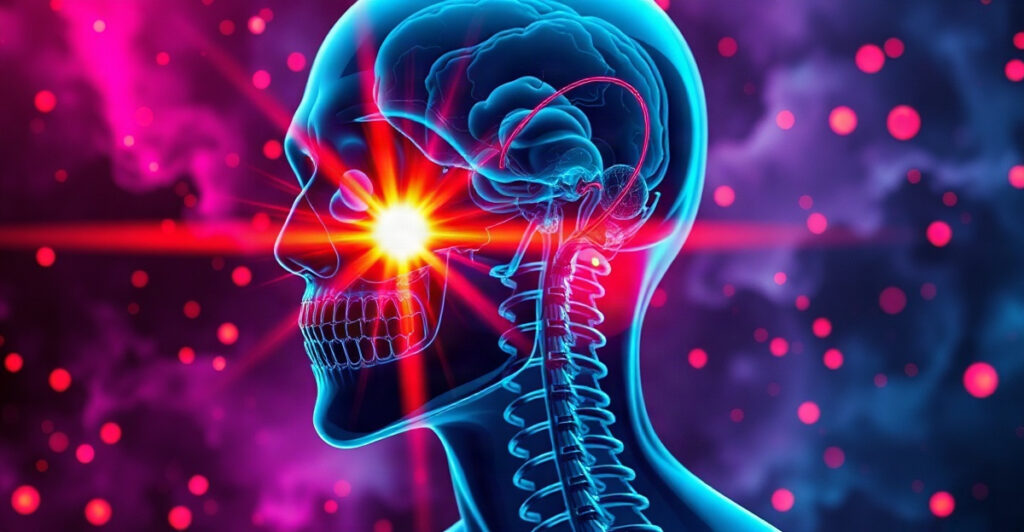
Rejection hurts so much because your brain runs it through almost the same wiring it uses for physical pain. That’s not a figure of speech and it’s not you being dramatic. It’s biology, and researchers can watch it happen on a brain scan.
Someone leaves you on read. You don’t get the job. A friend goes quiet for no clear reason. Each one can land like a real, physical ache, and that’s because on some level, your brain treats it like one. Here’s what’s actually going on in there, and what helps.
Why does rejection hurt so much?
Rejection hurts because being cut off from other people once meant real danger, so your brain built its alarm for social loss on top of the alarm it already had for physical injury. Social pain is the ache of being left out, dumped, or ignored, and it’s real enough to show up on the same brain scans as a burn or a cut.
Psychologists have known for years that rejection does more than bruise your mood. A widely cited roundup in Psychology Today on the science of rejection notes that it can even shrink your ability to reason clearly for a short stretch afterward, because the brain is busy running its threat response instead of your logic.
So when a snub knocks you off balance for the rest of the day, you’re not overreacting. You’re having a normal response to something your nervous system reads as a real threat.
What happens in your brain when you get rejected?
When you get rejected, a distress-flagging region of your brain fires up, the same one that lights up during physical pain, and the harder it fires, the worse the rejection feels. Researchers have mapped this out across several separate studies, each looking at rejection from a different angle.
A psychologist named Naomi Eisenberger ran a now-famous 2003 study where people played a simple ball-tossing game with two other players while lying in a brain scanner. Partway through, the game was rigged so the other two players stopped throwing the ball to the first person at all.
Being frozen out that way switched on the same alarm region that fires during physical pain, according to the study published in the journal Science. The more that region lit up, the more distress people reported feeling, which is a strong sign the brain isn’t faking the overlap.
| Study | What people did | What the brain scan showed | Why it matters |
|---|---|---|---|
| Eisenberger et al., 2003 | Played a ball game rigged to leave them out | Pain-distress region fired the same as physical pain | Social exclusion is processed as a real threat, not just a mood dip |
| Kross et al., 2011 | Looked at a photo of a recent ex while recalling the breakup | Raw sensory pain regions activated, not just the distress ones | Heartbreak can feel physical because it partly is |
| DeWall et al., 2010 | Took daily acetaminophen (Tylenol) for three weeks | Brain’s pain response to exclusion shrank over time | Physical and social pain share enough wiring that a painkiller can dull both |
| Eisenberger, 2012 review | Summarized years of social pain research | Confirmed a consistent overlap between physical and social pain circuits | The link isn’t a one-off finding, it holds up across many studies |
Does rejection feel physical, or is it only emotional?
Rejection can trigger the same raw physical sensation pathways as touching something hot, not just the emotional distress pathways, according to a 2011 study out of the University of Michigan. Researchers led by Ethan Kross had people who’d recently gone through an unwanted breakup look at a photo of their ex while thinking about the split.
The scans, published in the Proceedings of the National Academy of Sciences, lit up regions that carry the raw sensory experience of pain, the same ones active when your skin touches something too hot to hold. That’s a step beyond just feeling sad. On some level, the body is registering the loss like an actual injury.
So when someone says heartbreak “physically hurts,” they’re closer to the truth than they probably realize.
Can a painkiller actually dull the pain of rejection?
A common over-the-counter painkiller measurably reduced people’s hurt feelings in a controlled study, which is strong evidence that social and physical pain share real wiring. In a 2010 study published in Psychological Science, researchers led by C. Nathan DeWall had participants take acetaminophen, the drug in Tylenol, every day for three weeks.
The people taking it reported fewer hurt feelings day to day compared with a group taking a placebo. Brain scans backed that up, showing a smaller pain response to social exclusion in the group that had been taking the painkiller.
To be clear: this isn’t a tip to medicate loneliness or grief with painkillers. It’s one clean piece of proof that the two kinds of pain run through overlapping circuitry, which researchers are still working to fully map out.
Why did evolution wire rejection to feel like a threat?
Evolution wired rejection to hurt because for early humans, getting cut off from the group was close to a death sentence. No group meant no food-sharing, no protection from predators, and no help raising kids, so being pushed out could genuinely end a person’s chances of survival.
Rather than build a whole new warning system for social danger, the brain appears to have reused the one it already had for physical injury. That’s the theory researchers point to when they explain why the ache of rejection can feel so disproportionate to a small, modern slight, like a text that goes unanswered for a day.
The American Psychological Association’s coverage of this research area notes that people who are more sensitive to physical pain also tend to feel social rejection more sharply, another sign the two systems are tangled together rather than separate.
The feeling isn’t random. It’s an old alarm doing exactly what it was built to do, even when the danger today is smaller than it once was.
Why can’t you just think your way out of feeling rejected?
You can’t logic your way out of rejection because the alarm that’s firing doesn’t respond to reasoning, the same way telling yourself a stubbed toe “doesn’t matter” won’t stop it from throbbing. Trying to argue with the feeling usually just adds frustration on top of the original sting.
A more useful move is to treat it the way you’d treat a physical injury instead of a character flaw. Name what happened, let yourself feel it, and give it a little time before you decide what it means about you or the other person.
That small shift, from judging the feeling to just tending to it, tends to be the difference between a bad hour and a bad week. If you want a structured way to sit with what a rejection brought up, working through a few self-discovery journal prompts can help you get it out of your head and onto paper.
Does being kind to yourself help you recover faster?
Meeting a rejection with self-compassion helps people recover faster than either ignoring the feeling or trying to boost their self-esteem, according to a set of five studies led by psychologist Mark Leary. Self-compassion just means talking to yourself the way a good friend would, instead of piling criticism onto an already bad moment.
Published in the Journal of Personality and Social Psychology, Leary’s research found that this approach worked better than pep talks aimed at feeling good about yourself. It also helped people own their own part in a situation honestly, without spiraling into shame about it.
A simple way to practice this is to write down exactly what you’d say to a friend who came to you with the same story, then read it back to yourself. Pairing that with a short calming meditation practice can help settle the nervous system enough for the kinder voice to actually land.
Should you reach out or pull away after a rejection?
Reaching out to someone who’s glad to hear from you helps more than pulling away, even though pulling away is what rejection makes you want to do. Social pain has a habit of pushing people toward isolation, which usually just feeds the ache instead of easing it.
A short message to a safe, friendly connection works like ice on a sprain. It doesn’t need to be about the rejection at all. The point is reminding your nervous system that you still belong somewhere, which is the exact thing the alarm is worried about.
The other habit worth watching is replaying the moment. Social pain fades over time, but oddly, you can bring it back to nearly full strength just by remembering it in detail, more easily than you can re-trigger physical pain by recalling an old injury. Every replay rings the alarm again, so when you catch yourself starting the loop, it helps to redirect on purpose: go for a walk, start a task, or reach out to that safe connection instead.
Getting clear on what you actually want next, instead of stuck replaying what went wrong, is also where a lot of people find it useful to revisit why your feelings carry real information about what to do next, rather than something to just push past.
Frequently asked questions
Why does rejection hurt so much psychologically?
Rejection hurts psychologically because your brain treats social exclusion as a survival threat, not just a disappointment, and routes it through the same alarm system it uses for physical pain. That reaction dates back to a time when being cut off from the group was genuinely dangerous.
Is social pain the same as physical pain in the brain?
Social pain and physical pain aren’t identical, but they share real overlap in the brain regions that process distress and, in some cases, raw physical sensation. Studies from researchers like Naomi Eisenberger and Ethan Kross have shown this overlap repeatedly using brain scans.
Can rejection cause physical symptoms in your body?
Yes, rejection can trigger real physical sensations, including a tight chest, a heavy stomach, or an aching feeling, because it activates some of the same sensory pain pathways as a physical injury. That’s part of why heartbreak can feel like an actual wound.
How long does the pain of rejection usually last?
Social pain from a rejection typically fades within days to a few weeks for most people, though intensity and timeline vary by the situation and how close the relationship was. Replaying the memory in detail can re-trigger the pain and slow that natural fading down.
Does self-compassion actually help you get over rejection?
Yes, research led by psychologist Mark Leary found that people who respond to rejection with self-compassion recover faster than those who try to boost their self-esteem or push the feeling away. Treating yourself the way you’d treat a good friend appears to work better than a pep talk.
Rejection hurting isn’t a flaw in you. It’s a very old system doing exactly what it was built to do. Be as patient with yourself as you would with a friend nursing a bruise, and give it the time a bruise would actually take. If you’d like a gentle daily nudge in that direction, stop by for the free daily message from the universe and a short abundance meditation, made for exactly these kinds of days.