
Witchy room decor comes down to a handful of high-impact moves: a candle cluster, an altar corner, dried herbs hanging to dry, crystals on every windowsill, moody layered lighting, celestial prints, and a color palette of black, cream, and deep jewel tones. You can transform a room in an afternoon for under $50, and most of the magic comes from rearranging what you already own. Here are 15 ideas, from 5-minute fixes to weekend projects.
What makes a room feel witchy?
A room feels witchy when it layers old-world natural elements (herbs, wood, candles, stones) with celestial and mystical accents, all under low warm lighting and a moody palette. The aesthetic draws from cottagecore, dark academia, and traditional folk practice, and the through-line is intention: every object feels chosen, placed, and meaningful rather than accidental. This is the same principle behind our guide to building a manifestation altar, and it is why witchy decor works as more than style. A room that signals “this space is for ritual and reflection” makes both easier to actually do.
Start with light, because light does half the work. Overhead lighting is the enemy of witchy atmosphere; lamps, candles, and string lights at eye level or below are its best friend.
What are the best witchy room decor ideas?
The highest-impact witchy decor ideas are candle clusters, an altar corner, hanging dried herbs, crystal displays, mirror scrying spots, celestial wall art, and book stacks, all under layered warm lighting. The list below runs from free and instant to weekend project, so you can stop wherever your budget stops.
| Idea | Cost | Time | The move |
|---|---|---|---|
| Candle cluster | $0 to $20 | 5 minutes | Group 5 to 9 candles of varied heights on a tray or mirror |
| Altar corner | $0 | 30 minutes | A small table, a cloth, 3 meaningful objects, one candle |
| Dried herb bundles | $0 to $10 | 15 minutes | Hang lavender, rosemary, or eucalyptus upside down from twine |
| Crystal windowsill | $0 to $25 | 10 minutes | Line crystals along the sill where sun and moon hit them |
| Moody lighting | $10 to $30 | 15 minutes | Swap overhead bulbs for warm lamps and amber bulbs |
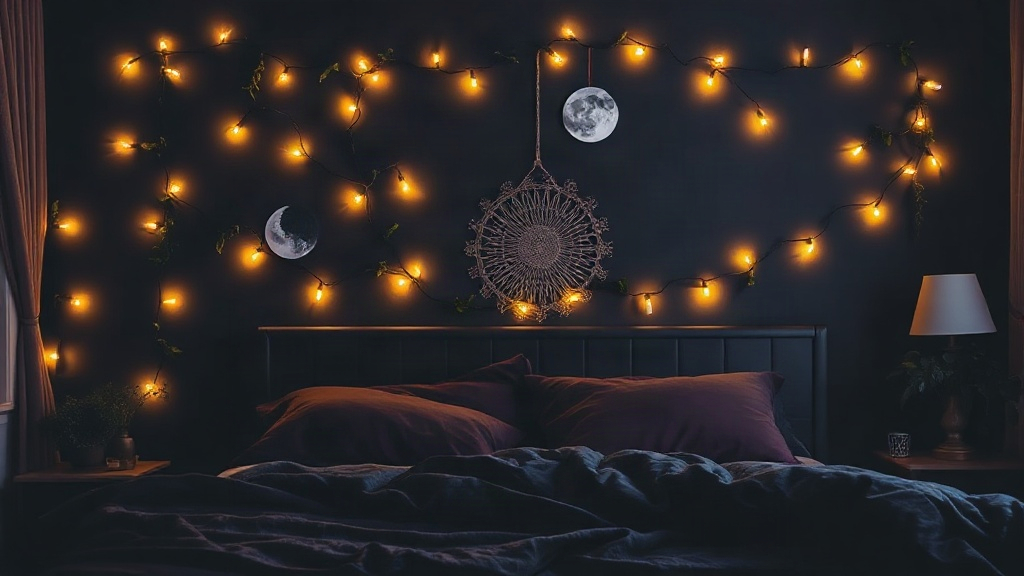
| String lights and vines | $10 to $20 | 30 minutes | Warm-white lights wound with faux ivy along a wall or headboard |
| Celestial wall art | $0 to $15 | 20 minutes | Print moon-phase or star-chart prints; thrift frames |
| Mirror with presence | $0 to $30 | 15 minutes | An ornate or round mirror angled to catch candlelight |
| Book stack altars | $0 | 5 minutes | Stack old hardcovers, top with a candle or skull or stone |
| Apothecary jars | $10 to $25 | 20 minutes | Filled jars of dried rose petals, salt, or herbs on a shelf |
| Wall hanging or dark curtains | $15 to $35 | 30 minutes | A celestial or botanical wall hanging as a headboard or ceiling drape |
| Teacup and potion corner | $0 to $15 | 15 minutes | A vintage teacup, a kettle, and a tea ritual station |
| Potted plants | $5 to $30 | 30 minutes | Ferns, pothos, or a small herb garden for living energy |
| Incense and smoke corner | $5 to $15 | 5 minutes | A dedicated dish, sticks, and a heat-safe surface |
| Full palette shift | $20 to $60 | Weekend | Black, cream, deep green, and plum textiles layered together |
How do you set up a witchy altar in a small room?
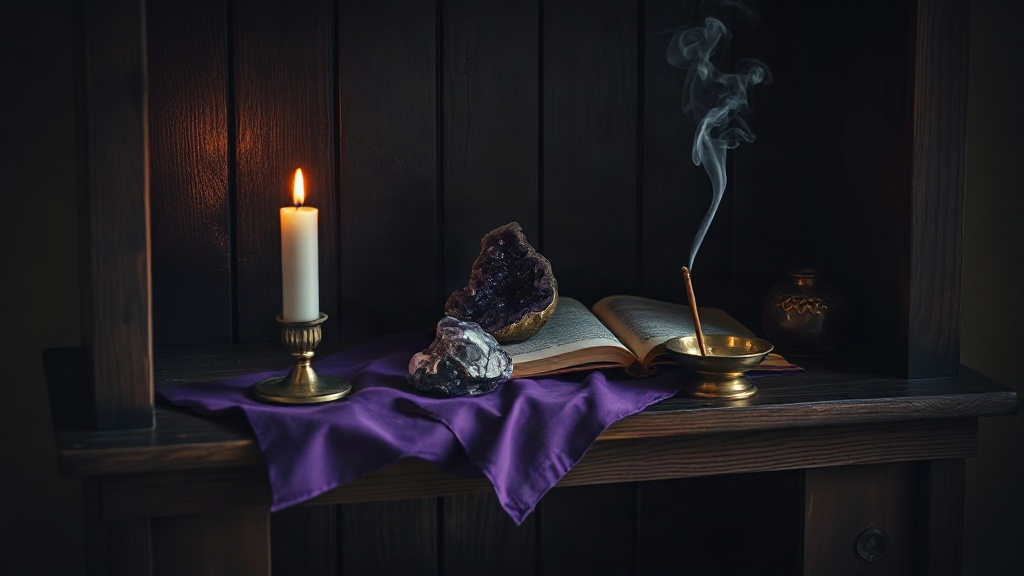
Set up a small-space altar on any flat surface about 2 feet wide: a shelf, a nightstand, a windowsill, or the top of a dresser, anchored by one cloth, one candle, and three objects that mean something to you. The cloth defines the sacred zone (black, cream, or deep purple works), and the three objects give it personality: a crystal, a shell, a photograph, a tarot deck. Our full manifestation altar guide walks the layout in detail, including how to position the elements. The small-space rules: vertical beats horizontal (wall shelves make excellent altars), round beats square (a round tray softens a rectangular room), and everything on it should earn its place.
What colors are best for witchy decor?
The core witchy palette is black, cream, and warm wood tones, with deep jewel accents: forest green, plum, midnight blue, and oxblood. The formula that works in real rooms is roughly 60 percent dark neutrals, 30 percent warm naturals (wood, dried plants, brass), and 10 percent one jewel tone repeated in three or four places. Matte finishes read more witchy than gloss, and brass, antiqued gold, and black iron are the metals of the aesthetic. If a full repaint is out of reach, textiles carry the palette: dark curtains, a moody duvet cover, and thrifted pillows transform a room faster than paint.
How do you make a room witchy on a budget?
Make a room witchy for free by rearranging what you own into intentional groupings: candles you already have onto one tray, books into stacks, stones onto windowsills, jewelry onto a prominent hook, and every lamp onto a dimmer or lower bulb. Thrift stores supply the rest for pocket change: brass candlesticks, old frames, apothecary-adjacent glassware, ornate mirrors, and hardcover books with good spines are permanent thrift-store inventory. Nature supplies the dried herbs, interesting branches, stones, and shells. The most photogenic witchy rooms on any platform are mostly composed of exactly these three sources: owned, thrifted, and gathered.
One habit separates the rooms that work from the rooms that try too hard: editing. Group items in odd numbers (3, 5, 7), leave some surfaces almost empty, and let one or two objects be strange (a preserved butterfly, a chipped bust, an antique key). Restraint is what makes it read as magic rather than merch.
Frequently asked questions
How can I make my room look witchy without buying anything?
Rearrange and regroup: cluster your candles on a mirror or tray, hang any dried herbs or flowers upside down, line your stones along a windowsill, stack your oldest books, and switch every lamp to its lowest warm bulb. Grouping scattered objects into intentional stations is the single biggest change, and it costs nothing.
What is the witchy aesthetic called?
The most common names are witchcore, cottagecore (its softer plant-heavy cousin), dark academia (the scholarly version), and whimsigoth, the 1990s-influenced blend of gothic and celestial that dominates most witchy room inspiration today.
What colors are witchy for a bedroom?
Black, cream, and warm wood as the base, with deep jewel accents: forest green, plum, midnight blue, or oxblood. Aim for matte finishes, warm low lighting, and one jewel tone repeated in several places rather than several colors used once.
Where should I put my altar in a small room?
Anywhere you will actually see it daily: a nightstand, a floating shelf, a windowsill, or a dresser top. A 2-foot surface with a cloth, a candle, and three meaningful objects is a complete altar, and vertical wall shelves are the best-kept secret for tiny rooms.
Is witchy decor bad luck or inviting?
In every tradition that discusses it, decorating with intention is considered inviting: altars, candles, herbs, and protective stones exist to bless a space. If any object carries a meaning you do not want, that is the object to leave out. The room becomes what you intend it to be.
A room built with intention is a daily spell on your own behalf. If you want a companion practice to match, get a free “message from the universe” in your inbox every morning, plus the abundance meditation.