- What Yule is: the old midwinter feast of Northern Europe, kept in the long nights around the winter solstice. It is also the name of a modern pagan holiday.
- Where the word comes from: an old Germanic word, jol. Its deeper origin is debated, so be wary of tidy claims.
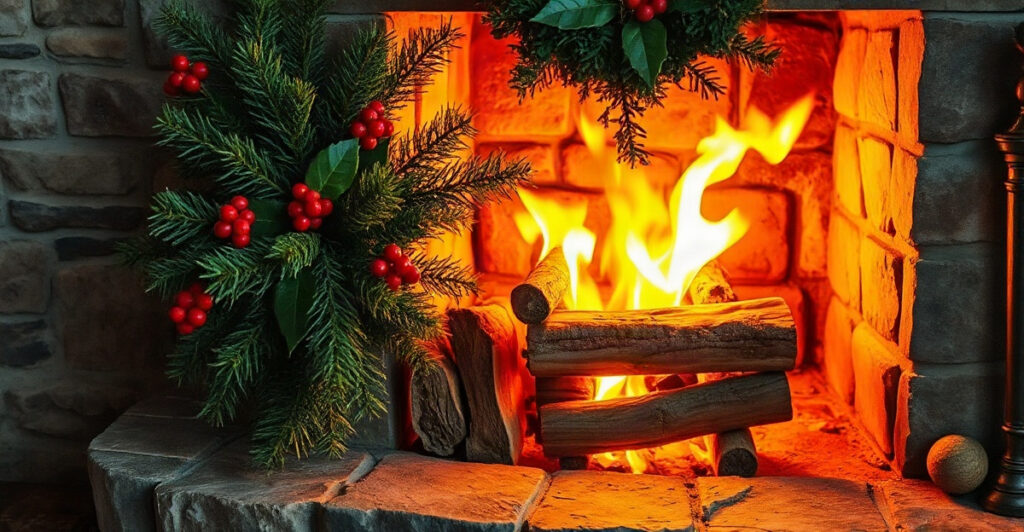
- The symbols: evergreen (life that stays green), the log (fire carried through the dark), holly and mistletoe, and the wreath (a circle with no end).
- When: around the winter solstice, December 20 to 22, and many people keep Yule that night or at the next sunrise.
What is Yule?
Yule is the old midwinter feast of Northern Europe. The name, it is said, comes from an old word, jol, whose beginning nobody can fully trace. Jol, it’s strange that a word can exist and no one can say how it was born, that there can be something so old and yet so present, without its origin being known.
But the unknown doesn’t stop it from being here. And is it such a bad thing not to know the beginning of everything? It’s even more strange to me that anyone would want to invent a beginning when it’s unknown.
Why not simply say we do not know? And then live with it as best we can. That would be more honest, would it not?
I cannot tell you how it came to be, but I can tell you what I think it means. It’s really very simple. It’s the feast of the turning of the year, the longest night, when we look forward again to the time of increasing light.
In this region, the nights are long, very long indeed, and very dark. In such darkness, we become more aware of our need for one another. You do not wish to be alone on such a night. For you see, we belong together, we can keep watch, and together we can keep the fires burning.
And so it is a feast of celebration and a time of peace, for why would we wish to argue and fight in the face of such darkness, when we need each other most? I think it is even more than that. I think it is a holy night. I think there is a magic in this turning from dark to light.
How did people keep Yule long ago?
In the old accounts, people gathered in the long dark. This was the time to eat and to drink, to sing, to tell stories and to make promises. There was always a feast. At first it lasted for several nights, then it grew to twelve days.
They brought green branches indoors, a reminder that the world had not died and would become green again. They lit fires to keep away the cold. And they kept the fire burning, because to let the fire die out was an invitation to the cold and the dark to take everything.
When the sun finally stopped his southwards path and began his slow journey north, the people knew that the miracle had happened once again. Life would return, the earth would grow warm, there would be food again. This was the festival of the winter solstice, the turning point.
It was always a time to be together, because even if you had enough food, you couldn’t eat it alone in the cold and the dark, month after month. You had to bring it with you, whatever you could spare, and put it together, and sit with other people, perhaps the ones you hadn’t seen all summer because everyone was so busy with the planting and the weeding and the harvesting. A feast in the dead of winter says, we are still here, and we are together. We survived another year, and we will do it again next year.
All of our winter holidays have their roots in that time of darkness. This year, if you feel burdened by the holidays, if you are rushing around to find the right gifts, the ones you can’t afford and they don’t really want, if there’s too much cooking to do and you’re tired of wrapping, if you are weary of the commercial side of the holidays, take a moment to look into the darkness, to the source.
| Question | What the old sources say |
|---|---|
| How long did it last? | Accounts differ. Some describe a feast of about three nights, later traditions speak of twelve days, and a few writers say two months. No single figure is certain. |
| What did people do? | They feasted, drank, told stories, and made promises, according to Norse and later written accounts. |
| Where does the name appear first? | In the early 700s, the English monk Bede names the months around December and January “Giuli.” See the history of Yule. |
What do the symbols of Yule mean?
The symbols of Yule are there because they all mean something. The evergreen, the plant that is green even in the dark. It is life that survives the longest winter, the deepest snow, the bitterest cold. Even with the winter world dead around it stays green.
The log, a fire we bring indoors, a fire that we carry through the dark. When we go into the sunless cave of winter, we take the sun’s light with us. Holly and mistletoe, green things that live when the winter comes, but more magical things that can’t be explained.
Holly because it bears fruit, bright red, while everything else is brown and dead, and mistletoe because it was believed to have no roots, living between heaven and earth on another tree, with no hold on the ground below. The wreath, a circle, something with no end. It looks like the sun itself, like the wheel that turns, like the year, like life itself.
And every symbol is an answer to the same fear. Will the cold kill us? We make a circle of hope against that fear, and because we hold that fear and make that circle, spring comes.
The reason I tell you about the circle of hope against that fear is because fear is nothing more than our imagination. When we are fearful, when we are full of anxiety, when we are worried, what we’re basically doing is taking our thoughts away from where we are, away from God, away from spirit, away from the source, and using them to create in our own imagination something that is not what we would like to have happen. And we do this over and over again, until that fear becomes the dominant force in our life.
| Symbol | What it stands for | How to use it today |
|---|---|---|
| Evergreen | Life that stays green through the longest winter | Bring pine, spruce or cedar branches indoors |
| Yule log | A fire carried through the dark | Light a small log fire, or a cluster of candles |
| Holly | Red fruit while everything else is bare | Place a sprig on the table |
| Mistletoe | A plant that lives between heaven and earth | Hang a sprig in a doorway |
| Wreath | A circle with no end, like the year | Hang one on the door |
How do Yule and Christmas fit together?
When the festival of the birth of Jesus was placed on the 25th of December, many of the customs of the Yule festival were brought into it. That’s why we have our evergreens and our logs and our feasts and so on. The Yule and the Christmas are not enemies.
Many families are blessed with both. You can keep both if you choose. You do not have to choose one tradition to honor another.
The two keep company in many homes. For the sun-centered side of the story, see our guides to the winter solstice meaning and the winter solstice ritual.
How do you celebrate Yule at home?
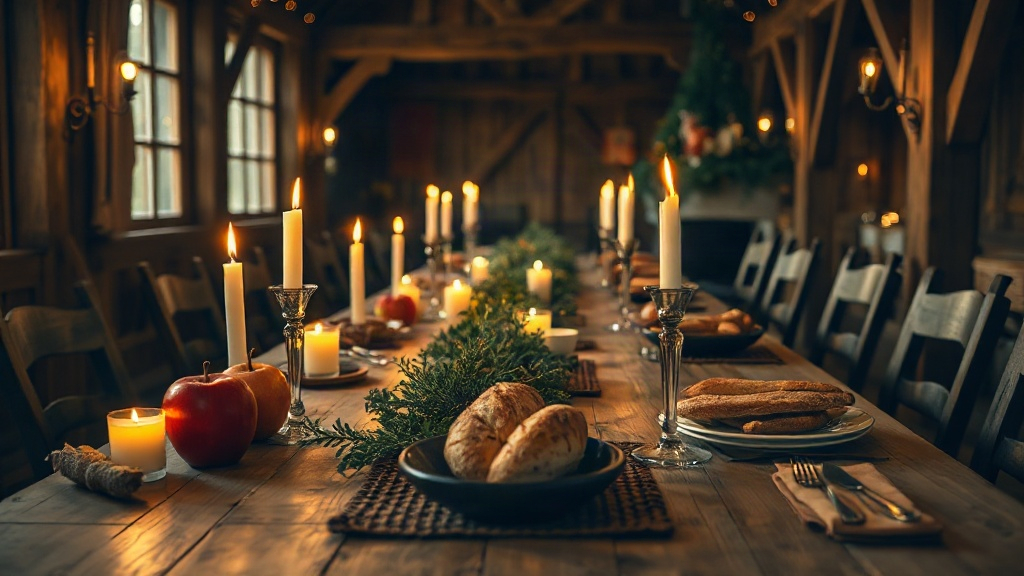
You can celebrate Yule at home very simply, even if you’re alone. All you need is some sort of light source, even a single candle will do, though a log fire is even better. It is nice to bring in some evergreen branches, such as pine, spruce, or cedar, to remind yourself of the continuity of life, and perhaps also a few apples to remind yourself that the sun will return and things will grow again.
Make yourself a nice meal and share it with people you love. Go around the table and ask each person to name one thing that they are grateful for. You can play music, sing, tell stories, or do whatever makes you feel happy. If you wish, you can stay awake through the night to guard the flame of light, and then watch the sun rise on the morning of the winter solstice.
The most important thing to remember when planning your Yule celebration is that you should celebrate the return of the sun, and the return of hope. That means you should not allow yourself to become stressed or overworked by all of the preparations. Your holiday will not be ruined if you don’t serve exactly the right food or if you don’t get gifts for everyone on your list, but it will be ruined if you are so stressed out that you cannot enjoy the company of your friends and family.
A simple Yule that is full of joy is much better than an elaborate, stressful Yule. After all, the winter solstice is the longest night of the year, so it is the night when you need warmth the most. If everyone in your home is warm, then you have done Yule the right way.
Yule is a holiday that is deeply rooted in human history and the cycles of the earth. By celebrating the return of the sun, you are connecting yourself to generations of people who have come before you, and you are also connecting yourself to the natural world. This winter solstice, take some time to reflect on the past year, appreciate the good things in your life, and look forward to the future with hope.
Light a candle against the darkness, share a meal with people you love, and welcome the return of the sun. Happy Yule.
Which Yule stories are old, and which are new?
It’s something about what are the stories of your life, the stories that you tell yourself and other people. Are you absolutely attached to the idea that if you have a custom or if you have a way of doing something, that it somehow has to be antiquated, it has to have its roots in ancient kinds of history, or can you just enjoy the story and what it means to you without having any attachments to where its source is? Because its source is really from the place within you.
Some customs that we feel are very old are really quite modern, but we like to think they date from ancient times because we find comfort in that idea. It is good, though, to know what is ancient and what is not. Why? Because you can enjoy a custom without needing to have it be old.
Its worth is in the doing. A candle lit with love is the same candle whether it is lit in this century or a thousand years ago.
| Claim | What the sources support |
|---|---|
| Yule was a midwinter feast of Northern Europe | Well supported by Norse and early medieval sources. |
| The word comes from “wheel” | A popular idea, but scholars widely doubt it. The origin of jol is unknown. |
| The Yule log is a Viking custom | Firm written records of the Yule log as a Christmas custom are much later than the Viking age. |
| Kissing under mistletoe is a Norse custom | The kissing custom is recorded in 18th-century England, not in Norse sources. |
| Odin gave rise to Santa Claus | A popular modern link, not a documented line of descent. |
| The Oak King and Holly King battle at the solstice | A modern pagan story, popularized in the 20th century, not an ancient record. |
Frequently asked questions
What does Yule mean?
Yule is the old midwinter feast of Northern Europe, and also the name of a modern pagan holiday kept at the winter solstice. The word comes from an old Germanic word, jol, whose deeper origin is debated.
When is Yule?
Modern Yule is usually kept on the winter solstice, December 20 to 22. Some people celebrate over the days around it, and some keep a twelve-day Yuletide.
What are the symbols of Yule?
The main symbols are the evergreen, the Yule log, holly and mistletoe, and the wreath. Each stands for hope: life that stays green, light carried through the dark, and a circle with no end.
What is the difference between Yule and the winter solstice?
The winter solstice is an astronomical moment on one day. Yule is the festival tied to that time of year, so many people use the two words for the same celebration.
Is Yule the same as Christmas?
No, but many Yule customs, such as the evergreen, the log, and the feast, were carried into Christmas. Many families keep both without choosing one over the other.
How do I celebrate Yule at home?
Light a candle or a small fire, bring in evergreen branches, share a meal, and let each person name one thing they are grateful for. If you wish, stay up through the night and watch the sun rise.
Keep the light lit
The universe keeps sending you signs. Get one in your inbox every morning, join the free daily message from the universe. Want a ritual for the first night of a new cycle? Try our new moon manifestation guide.