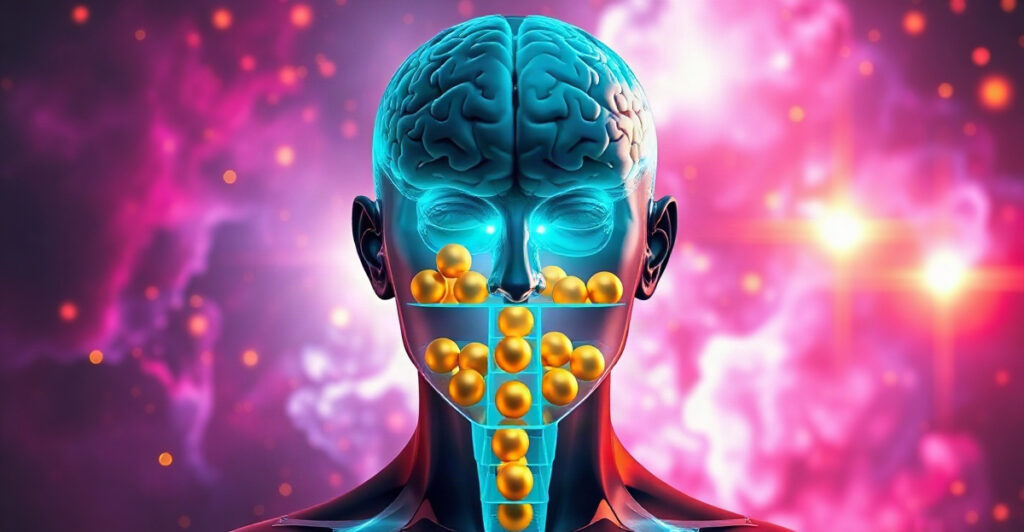
Real confidence comes from proof you build yourself, not praise from others.
The most reliable way to build self-belief is to collect proof. Each time you do something hard and write it down, you create evidence your mind can’t argue with. Praise from others helps for a moment, but your own track record lasts.
David Goggins described this on the Huberman Lab podcast as an inner “medicine cabinet.” It’s stocked with past wins he can reach for whenever he feels low. Psychology has a name for the same idea, and decades of research behind it.
What is self-belief, really?
Self-belief is your confidence that you can do what a situation asks of you. Psychologists call it self-efficacy, a term made famous by Stanford psychologist Albert Bandura.
It’s different from self-esteem. Self-esteem is how much you like yourself. Self-efficacy is whether you trust yourself to handle a task, like running a mile, giving a talk, or saving $100 a month. You can like yourself a lot and still doubt you can do a specific thing.
That difference matters for anyone chasing a dream. Big goals ask you to trust yourself in new situations again and again. Self-efficacy is the kind of belief that gets you to start.
Where does real self-belief come from?
Real self-belief comes mostly from mastery experiences, meaning things you’ve actually done yourself. Bandura named this as the strongest of 4 sources of confidence.
In his famous 1977 paper in Psychological Review, summarized by the American Psychological Association, Bandura described 4 ways people build self-efficacy. This table compares them.
| Source | What it means | Example | How strong it is |
|---|---|---|---|
| Mastery experiences | Succeeding at something yourself | You finish your first 5K | Strongest and longest lasting |
| Watching others | Seeing someone like you succeed | A friend with your background starts a business | Helpful, especially early on |
| Encouragement | Others telling you that you can | A coach says, “You’ve got this” | Real but fades quickly |
| Body and mood | How calm or shaky you feel | A racing heart reads as “I’m not ready” | Can shift confidence up or down |
This lines up with Goggins’ story. He said nobody cheered him on while he lost more than 100 pounds and trained for the Navy SEALs. The confidence he has now, he said, came from the unseen work he did alone.
Takeaway: if you want lasting self-belief, stop waiting to be told you can. Build proof that you did.
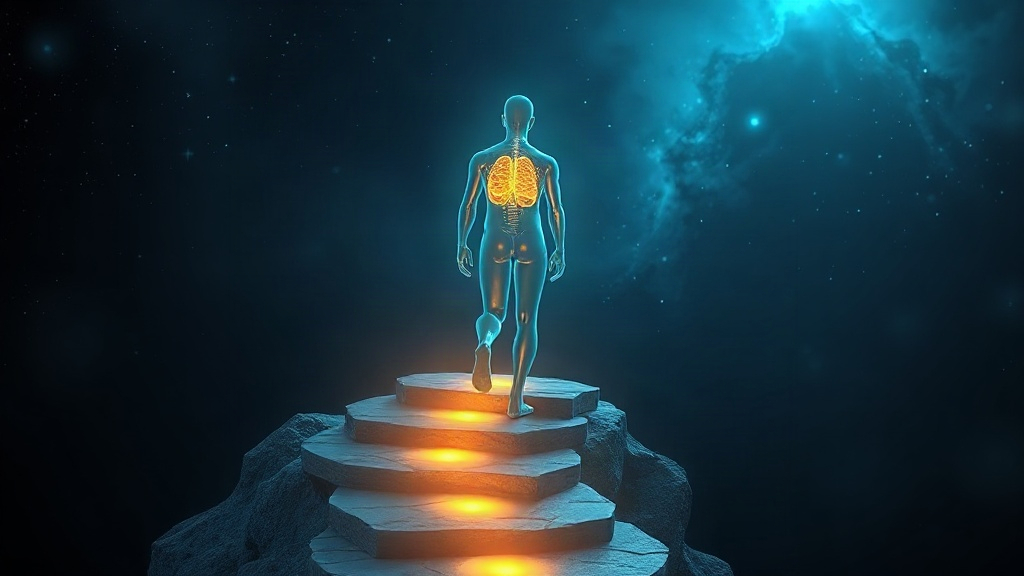
What is the “medicine cabinet” of past wins?
The medicine cabinet is Goggins’ image for a mental store of hard things you’ve already done, which you can reach for when doubt shows up. In his first book, he called a similar idea the “cookie jar.”
On the podcast, Huberman compared it to a pill on a shelf versus a cabinet inside you. The pill is outside help, like a pep talk, a hype song, or an energy drink. The cabinet is inside, and you fill it yourself through effort. Goggins said that unless you put the medicine in there, the cabinet stays empty.
Here’s what makes this idea so powerful. It turns Bandura’s mastery experiences into something you can use on demand. When you’re scared before a big moment, you don’t need someone else to believe in you. You open the cabinet and remember.
Do small wins count toward self-belief?
Yes, small wins count, and research suggests they may matter more than most people think. You don’t need a marathon to start filling your cabinet.
Teresa Amabile and Steven Kramer at Harvard studied nearly 12,000 daily diary entries from 238 workers. As they wrote in Harvard Business Review, the single biggest boost to people’s inner work life was making progress on meaningful work, even small progress.
So a hard phone call, a finished chapter, or 10 days without a cigarette all go in the cabinet. What matters is that it was hard for you and you did it anyway.
How do you build your own proof file step by step?
Build your proof file by writing down hard things you’ve done, adding to it weekly, and reading it before challenges. Here’s a 5-step practice.
- Start with your past. Take 15 minutes and list 10 hard things you’ve already gotten through. Moving to a new city, a tough recovery, a class you passed, a loss you survived. They all count.
- Write the details. For each one, add 1 sentence on what made it hard and 1 on what you did. Details make the memory feel real when you need it.
- Add 1 new entry every week. Choose a small hard task on purpose so you always have fresh proof. Our guide on how to build willpower has ideas.
- Read it before big moments. Before an interview, a workout, or a hard talk, read 3 entries. Let yourself feel them.
- Talk to yourself with it. Use the entries in your self-talk: “You got through that. You can get through this.” Our article on inner dialogue shows how.

What if you can’t think of any wins?
Start smaller. Getting out of bed on a heavy day is a win. Asking for help is a win. If your list is short today, choose 1 small hard thing for tomorrow and make it your first entry.
How does self-belief help you manifest?
Self-belief helps you manifest because people tend to act on what they believe they can do, and action is how intentions become results. When you trust yourself, you take the steps your vision asks for.
Many people try to manifest by thinking positively about the future while doubting themselves in the present. A proof file closes that gap. It gives your vision a foundation of real events, so your belief isn’t just hope. Our guide on identity shifting explains how seeing yourself as “someone who follows through” makes new habits stick.
Frequently asked questions
What is the fastest way to build self-belief?
Do 1 small hard thing and write it down, then repeat. Psychologist Albert Bandura found that your own successes, called mastery experiences, build confidence more strongly than praise or encouragement.
What is the difference between self-belief and self-esteem?
Self-esteem is how much you value yourself overall. Self-belief, or self-efficacy, is your confidence that you can handle a specific task or challenge.
What is David Goggins’ cookie jar method?
The cookie jar is Goggins’ name for a mental collection of hard things you’ve already overcome. When you face a new challenge, you reach into it for proof that you can push through again.
Why doesn’t encouragement from others last?
Encouragement helps, but Bandura’s research ranks it below personal experience. Praise fades quickly, while memories of what you actually did give your mind lasting evidence.
Can you build self-belief as an adult?
Yes. Self-belief is built through experience at any age. Each hard thing you do and remember adds to your confidence, no matter where you start.
Every hard thing you’ve survived is already proof of what you can do. The universe keeps sending you signs. Get one in your inbox every morning → To turn that belief into the life you want, read our guide on how to manifest.