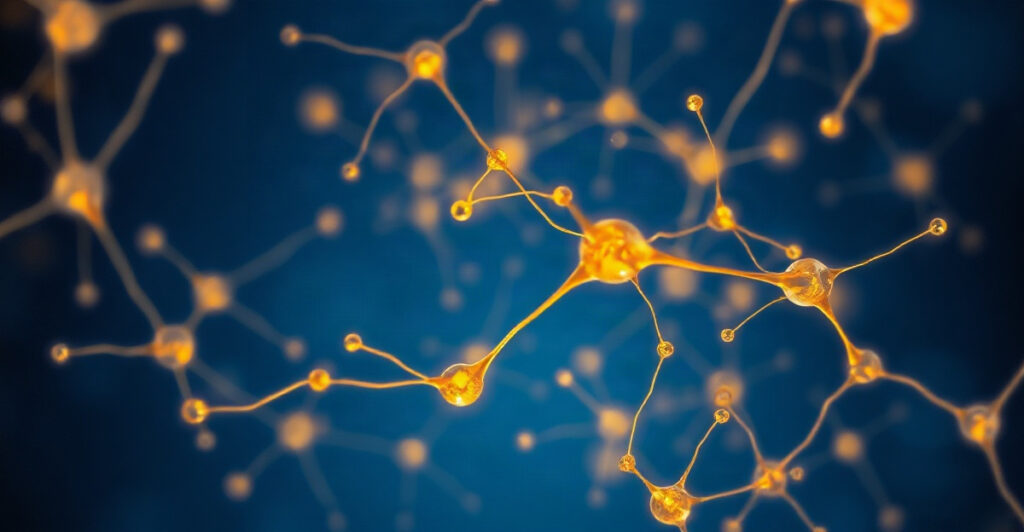
The same chemical that drives your motivation also helps you move. Here’s how the 2 systems work.
Your dopamine system has 2 main pathways, one that controls movement and one that drives motivation and craving. When dopamine neurons are damaged, as in Parkinson’s disease, both movement and mood can suffer.
Neuroscientist Andrew Huberman walked through this on the Huberman Lab podcast. Here’s the simple version of the biology, 2 real stories that show what’s at stake, and what you can do to look after your brain.
What are the 2 dopamine pathways?
The 2 pathways are the nigrostriatal pathway, mainly for movement, and the mesocorticolimbic pathway, for motivation, reward, and craving. Huberman gave a handy trick for the long names: the first part says where the neurons start, and the second part says where they connect.
| Pathway | Starts in | Connects to | Main job |
|---|---|---|---|
| Nigrostriatal | Substantia nigra | Dorsal striatum | Starting and smoothing movement |
| Mesocorticolimbic | Ventral tegmental area | Nucleus accumbens and prefrontal cortex | Motivation, reward, craving |
The second pathway is active whenever you chase a goal, such as a degree, a partner, or a finish line. It’s also the pathway that addictive drugs hijack.
What happens in Parkinson’s disease?
In Parkinson’s disease, dopamine neurons in the substantia nigra die off, causing shaky movement and trouble starting to move, and mood and motivation can drop too. Huberman noted that a similar picture appears in Lewy body dementia.
Because dopamine affects mood as well as movement, many people with these conditions also feel flat or depressed. When people are properly treated, some regain smoother movement, and they often feel better emotionally too.
This is general information, not medical advice. If you or someone you love has symptoms, a neurologist is the right person to ask.
What is the MPTP story?
In the 1980s, young people who bought what they thought was a street opioid called MPPP instead took a contaminated compound called MPTP, which destroyed their dopamine neurons. Huberman described how they became almost completely paralyzed, unable to speak, blink, or move.
MPTP, he explained, can form during the making of MPPP. It kills dopamine neurons in both pathways, which is why these patients lost movement and motivation. He said the damage was irreversible.
The takeaway is plain and serious: illicit drugs made in unregulated labs can carry unpredictable, life-changing risks.
What does very low dopamine feel like?
Very low dopamine feels like deep sadness, loss of motivation, and flat misery, according to Huberman’s own experience. He recounted being given an antipsychotic drug in an emergency room that blocks dopamine receptors, and said he cried endlessly without knowing why. When doctors gave him a treatment to raise dopamine, he felt normal within minutes.
He said this left him with deep respect for how powerful dopamine is for movement, mood, and motivation. It’s a single account, but it shows why steady dopamine matters.
How can you look after your dopamine system?
Think of this as protecting a delicate piece of equipment you can’t replace. You wouldn’t skip its maintenance, and you wouldn’t expose it to unknown chemicals. A 20-minute daily walk, a regular bedtime, and honest conversations with your doctor are small, ordinary ways of doing that.
You can look after it with regular exercise, good sleep, avoiding illicit and unregulated drugs, and seeing a doctor about movement or mood changes. There’s no guaranteed way to prevent Parkinson’s disease, so think of these as general brain-health habits.
- Move your body most days. Even a daily 30-minute walk supports brain and mood health.
- Protect your sleep. Your brain does important maintenance overnight.
- Avoid street drugs. The MPTP story shows contamination can be devastating.
- Don’t ignore early signs. Tremor, stiffness, or lasting low drive are worth a doctor visit.
- Keep your baseline steady. See why fun can leave you flat.
Huberman said later episodes would cover ways to support dopamine neuron health, so check his show for updates. For a related look at how habits shape your brain, read about neuroplasticity and habits.
Why does this matter for everyday motivation?
Picture someone who has always been energetic and starts to feel a heavy, slow drag over several months, with small tremors in a hand. Many people brush it off as stress or age. Knowing that dopamine pathways influence both movement and mood is a good reason to take such a combination seriously and mention it to a doctor early.
It matters because the machinery behind your drive is physical, so caring for your brain is part of caring for your dreams. Motivation is more than willpower. It rests on healthy circuits and a steady chemical foundation.
Motivation rests on healthy circuits, and those circuits depend on sleep, movement, and avoiding toxins. If your drive has felt low for a long time, be kind to yourself and get checked. Many causes, from sleep problems to thyroid issues to depression, can be treated.
Frequently asked questions
What are the 2 main dopamine pathways?
The nigrostriatal pathway mainly controls movement, and the mesocorticolimbic pathway handles motivation, reward, and craving.
Why does Parkinson’s disease affect mood?
Dopamine supports mood and motivation as well as movement, so when dopamine neurons die, people can feel depressed or unmotivated alongside movement problems.
What is MPTP?
MPTP is a toxic compound that can form while making the street opioid MPPP. In the 1980s it destroyed dopamine neurons in young drug users and caused severe paralysis.
Can you reverse dopamine neuron loss?
Huberman said the damage from MPTP was irreversible. Treatments can help symptoms in Parkinson’s, but there is no guaranteed way to restore lost neurons.
How can I support my dopamine system?
Exercise regularly, sleep well, avoid illicit drugs, and see a doctor about persistent changes in movement, mood, or drive.
Caring for your brain is the first act of caring for your dreams. The universe keeps sending you signs. Get one in your inbox every morning → For a clear next step, read our guide on how to manifest.