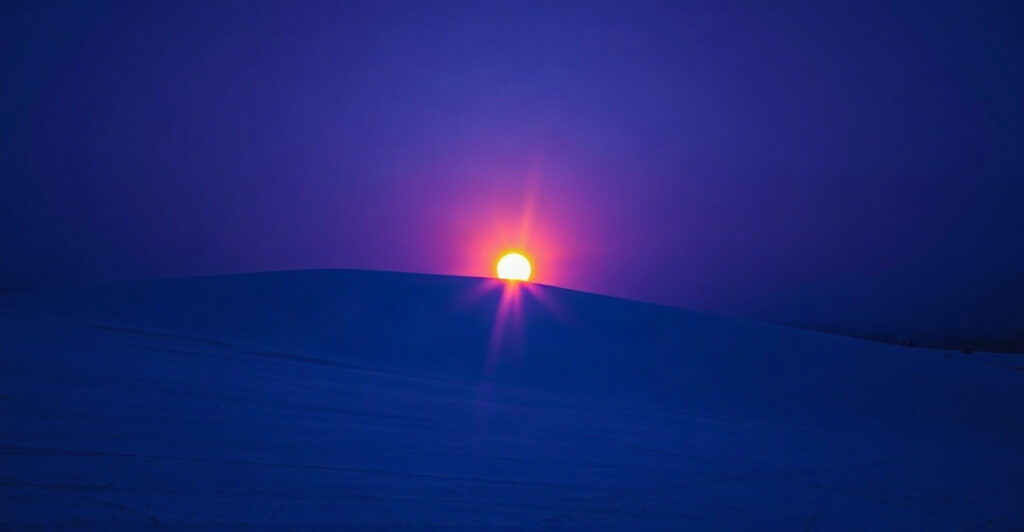
- What it is: the shortest day and longest night of the year. The word comes from Latin words meaning the sun stands still.
- When: December 20, 21 or 22 in the Northern Hemisphere, depending on the year. In the Southern Hemisphere it is in June.
- Why it happens: the earth is tilted about 23.4 degrees, and in December the northern half leans away from the sun.
- What it means: light returns out of darkness, and rest comes before every new beginning.
What is the winter solstice?
The winter solstice. It’s the beginning of winter. The term itself is from two old words which means “the sun stands still.” The sun stands still.
It’s the shortest day, it’s the longest night, and it’s also the day that marks the end of growing darkness. From here on in, the days will be longer and more light will prevail. More light will prevail.
There are two parts of that definition that really caught my eye. The first part is that the sun stands still. That’s what solstice means. In the standing still we can experience the truth of who we are.
It is the standing still, the being quiet, that’s what we do. It’s because in that standing still, we find our connection back to source. And the second part of it, which I really like, is after the standing still comes the light, the return to more light. That is, light prevails.
From this day forward, things brighten up, the days get longer, and the light prevails. But the light cannot prevail, and we can’t really grow and move into a sense of completion in our lives until we do the standing still. All of us are required to take time to go within, to find, as we get quiet, what’s really important. It’s the most significant thing that we can do.
| Fact | Northern Hemisphere | Southern Hemisphere |
|---|---|---|
| Winter solstice date | December 20, 21 or 22 | June 20, 21 or 22 |
| What changes after it | Days begin to lengthen | Days begin to lengthen |
| Word origin | Latin solstitium: sol (sun) and sistere (to stand still) | |
Why does the winter solstice happen?
The cause is the earth’s axial tilt of about 23.4 degrees, not distance from the sun. The solstice moment is tracked each year by observatories such as the US Naval Observatory, and the calendar date moves between December 20 and 22.
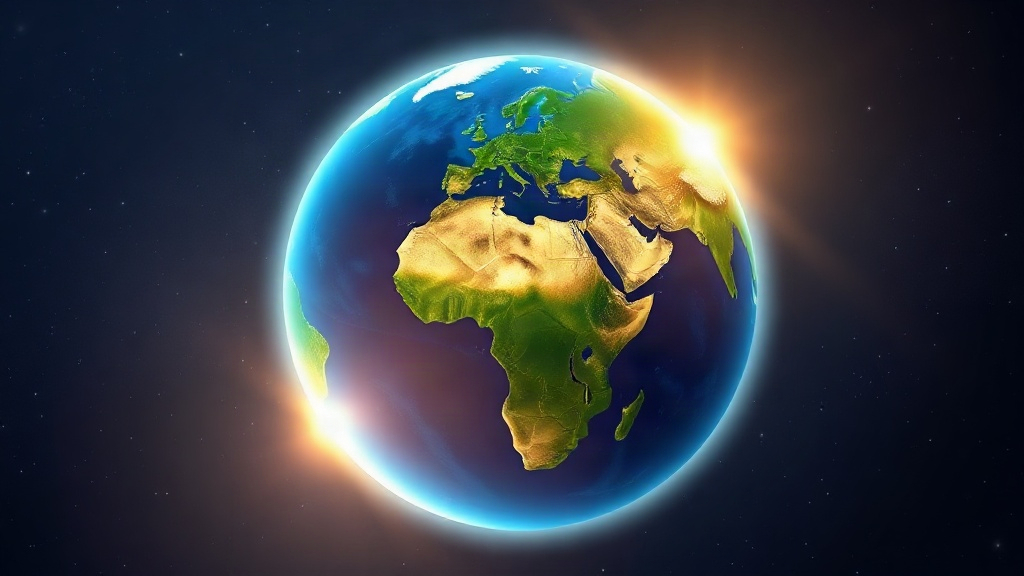
Why does this happen? The reason is simple. As our earth travels around the sun once a year, it’s tilted on its axis. And as we move through December, the northern half of our world tilts away from the sun.
The tilting away from the sun is why the night grows longer, why December is the darkest month, and why the night of the winter solstice is the longest night of the whole year. And then as the earth continues its journey around the sun, the tilt begins to shift again, and we begin to tilt back toward the light, and the nights begin to grow shorter again, and the days grow longer. The change takes place on the night of either the 21st or the 22nd of December, depending upon the year.
Now, of course, if you live in the southern half of our planet, the tilting toward and away from the sun works just the opposite way. Then you’re tilted most away from the sun in June. The longest night is then the night of the winter solstice for the southern hemisphere.
At any rate, no matter where you live on our planet, there is one night each year that is the longest, is the darkest of all of the nights of the year, is the winter solstice. This is the simple reason for why we have the winter solstice, and it is wonder enough. You don’t have to imagine there’s anything more to it.
You don’t have to wonder if maybe there’s some mystical spirit that pushes the earth around the sun. You don’t have to wonder if maybe the tilt is caused by some force. The fact of this tilting toward the sun, tilting away from the sun, the journeying around the sun is wonder enough.
What is the spiritual meaning of the winter solstice?
Now, the spiritual meaning of this day is that light returns out of darkness. Light returns out of darkness, and the dark isn’t the enemy. The dark is the darkness that’s in the womb. The dark is that place in the soil where we place seeds, and in the darkness, the seed rests.
And in every single occurrence in the natural world, in the spiritual world, in our physical world, rest comes before any new beginning. When you go into the dark, and things appear to be not going well, or it’s nighttime and the light has been turned off, and things aren’t clear, you look around. But rest comes before everything.
So what I’d like to suggest to you is that when you go into the darkness, when things look gloomy, when things are black, we have a whole series of idioms that are associated with that. “The darkness before the dawn,” we speak of, “the dark side of things, it was a dark day, things look dark right now.” But when we change our mind about what we mean by darkness and understand that the darkness is a necessary resting period before we move into the light, we stop fighting darkness.
We can’t fight darkness anyway, it is nothingness. If you want to fight darkness, the way that you do that is you bring in more light. But we stop saying, “Oh, why can’t things be better for me? Why can’t things be improved? Why does this have to happen?”
How have cultures celebrated the winter solstice?
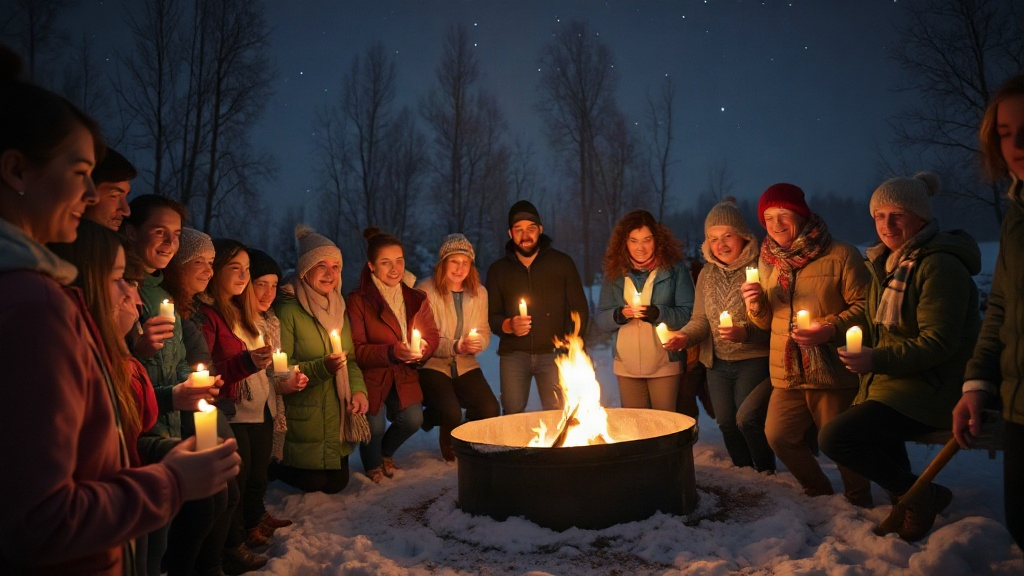
For we have gathered like this in every age, in every land, on this longest night, whenever people have felt the coldness of winter coming on this night, they have been driven by a common desire to draw together around the light. They have gathered around bonfires, they have gathered around candles, they have gathered around hearths.
Some 5,000 years ago in Ireland, people went inside Newgrange, a giant stone structure they had built with infinite skill, so that on the shortest day the rising sun would strike through a slit above the entrance and shine all the way down the stone passage, lighting the whole interior. In ancient times, the people of Northern Europe were celebrating Yule, lighting fires and gathering together for the Yule feast, rejoicing that the darkness would now begin to turn.
In China, families have gathered and still gather on this night, which they call Dongzhi, to be together and eat tang yuan, rice balls, while they welcome the light, which represents positive energy, yang, returning to the world. In ancient times, in Iran, on the longest night, which they called Yalda, families gathered together and stayed awake through the night, reading poems of Hafez and listening to music and eating pomegranates, and rejoicing that the victory of light over darkness was at hand. And in the Andes, the Inca people held festivals to honor the sun, the source of life, to express their dread that it might go away forever and to beg it to return.
This is the common thread, the same wish that runs through all of them. All across the world and through the centuries, on this night, people have felt this same strong desire, the urge to be together, to huddle in the warmth of companionship, to join hands and voices, and to welcome the light back into the world.
And so we celebrate that we have come through the darkness of another year and that a new dawn is soon to come. Let us celebrate together. Let us reach out to one another, so that we may warm each other. Let us rejoice.
| Tradition | Where | What it honors |
|---|---|---|
| Newgrange | Ireland, about 5,000 years old | The rising sun lights a stone passage on the shortest days |
| Yule | Northern Europe | A midwinter feast around fire. See our Yule guide. |
| Dongzhi | China and East Asia | Yang, the returning light, welcomed with family and sweet dumplings |
| Shab-e Yalda | Iran and nearby regions | The victory of light over darkness, with poetry and pomegranates |
| Saturnalia | Ancient Rome | A midwinter festival of feasting and gift-giving in December |
| Inti Raymi | The Andes (Inca) | The sun as the source of life, held at the June solstice in the south |
What does your own dark season mean?
It is the longest night of the year, but the longest night also happens inside of a person, inside of each of us. There is always a period of time in which we find ourselves being in the darkest, the most slow moving, the most difficult times of our life, and there’s a reason for it. We’ve all had those longest nights, these darkest hours, even though they may be happening right now in your life, or maybe you’ve just come out of them, but that they will return in some other form.
There’s a question that when you are in this longest night, this darkest period, this most slow moving time of your life, that you ask yourself, and the question is this. The question isn’t how do I hurry up and get past this, the question isn’t how do I run from it, the question isn’t how do I avoid it, because we know that it can’t be avoided. Just like the longest night, we know that it will come.
But there’s a question that when it comes inside of you, when it hits you and you’re in that deep place, you ask this question: “What is resting here? What is resting here? What is waiting to be born?” I ask you to think about that, because when you’ve been in the dark, and when you feel like, oh, I can’t move through this, it’s taking so long, it’s so difficult, it’s such a heavy thing that I have to carry, there’s always something beautiful that’s resting there.
And there’s another question that I’d like you to think about in this longest night. “What have you been too busy to hear?” This is the time when you take a moment and you ask that, and then you don’t even try to force the answer, you just allow the answer to come.
| Rest | Avoidance | |
|---|---|---|
| How it feels | Quiet, slow, and oddly peaceful underneath | Restless, numb, or full of dread |
| What you do | Sleep, walk, write, sit still, listen | Scroll, stay busy, put off a decision you already know |
| The test | You can name what is resting | You cannot bear to look at it |
If a dark season lasts for weeks and starts to affect your sleep, your appetite, or your daily life, talk with a doctor or counselor. Rest is a season. It is not meant to be a place to disappear.
How do you honor the winter solstice?
You can light one small light in your life. Just a tiny bit of light. For example, some of you may take some time this week to light a candle at dinner, or turn on a light for ten minutes in the morning as you walk around the house at sunrise, or take a little bit of time to make a call to somebody that that is suffering, who feels a sense of despair.
Perhaps it’s someone you haven’t talked to for a long time who is living in darkness, and just allow a little bit of light to shine on them. There are so many possibilities, but just think about one tiny little bit of light that you can introduce. There are ways to do it in your daily life in simple ways that can bring about more light to this planet, to our world, and to your personal life.
Don’t make it complex. If you think about, “I’m going to start being a real beacon,” then you’ll find yourself maybe disappointing yourself. Just make it real simple. Just allow yourself to bring a little bit more light to someone’s world this week, and then do something next week, but keep that one light lit, whatever it is.
And you’ll be honoring the shortest day, and you’ll be honoring the longest night. And you will be saying, because the meaning of the solstice is not that it is understood, but that it is practiced.
Ready to turn the meaning into a practice? Follow our step-by-step winter solstice ritual, or carry the idea into January with a New Year ritual.
Frequently asked questions
What is the meaning of the winter solstice?
The winter solstice is the shortest day and longest night of the year, and it marks the turning point after which the light grows. Spiritually it stands for rest, reflection, and the return of light out of darkness.
What does solstice mean?
Solstice comes from the Latin solstitium, from sol (sun) and sistere (to stand still). It describes the moment the sun seems to pause in the sky before it turns back.
Why is the winter solstice on December 21 or 22?
The earth’s axis is tilted about 23.4 degrees, and the exact moment of the solstice shifts slightly each year, so it lands on December 20, 21, or 22.
Is the winter solstice the shortest day everywhere?
No. It is the shortest day in the Northern Hemisphere. In the Southern Hemisphere the winter solstice and longest night come in June.
What is the spiritual meaning of the winter solstice?
Most traditions read it as the victory of light over darkness and a time for stillness before a new beginning. The dark is treated as the place where seeds rest, not as an enemy.
How is the winter solstice different from Yule?
The solstice is an astronomical event on a fixed day. Yule is a midwinter feast of Northern Europe that was tied to that time of year and later merged into Christmas customs.
Keep noticing the signs
The universe keeps sending you signs. Get one in your inbox every morning, join the free daily message from the universe. New to angel numbers? Start with our guide to angel numbers and what they mean.