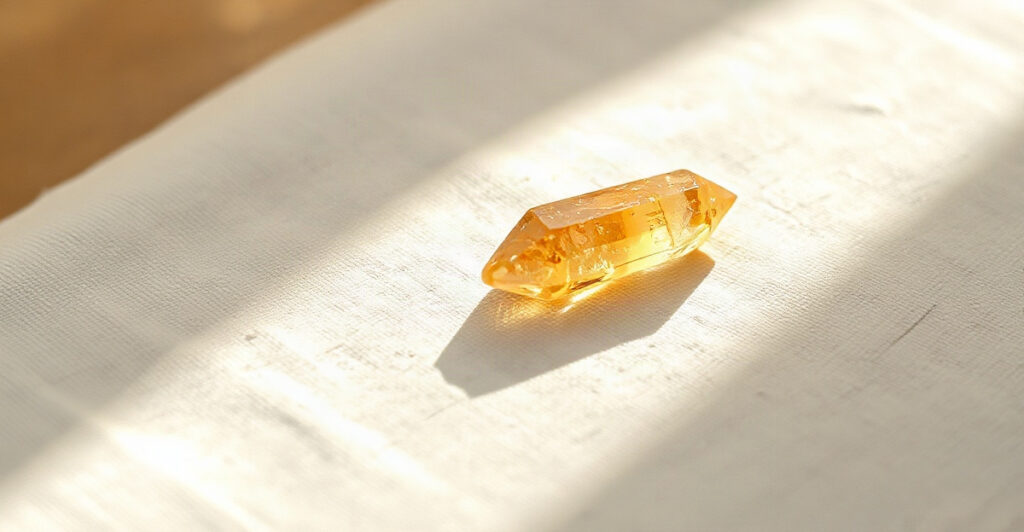
Citrine is a golden-yellow variety of quartz, and in crystal practice it is the stone of confidence, warmth, and abundance, often called the “merchant’s stone.” Most citrine sold today is heat-treated amethyst, while natural citrine is a paler, rarer yellow.
This guide covers what citrine is, how to tell natural from treated, what it is used for, who might skip it, and how to use, cleanse, buy, and price it well.
What is citrine?
Citrine is quartz (silicon dioxide) colored yellow to golden brown by traces of iron. It sits in the trigonal crystal system, rates 7 on the Mohs hardness scale, and shares its structure with amethyst, rose quartz, and clear quartz.
Its name comes from the French citron, meaning lemon. Colors range from a soft straw yellow to a deep “Madeira” orange-brown. According to the Gemological Institute of America, natural citrine is uncommon, which is why most stones on the market are made by heating other quartz.
- Composition: SiO2 with iron impurities.
- Hardness: 7, durable enough for daily-wear jewelry.
- Main sources: Brazil, Bolivia, Madagascar, and parts of Africa.
- Related stone: ametrine, a natural mix of amethyst and citrine from Bolivia.
For the wider family of quartz and other stones, see our guide to crystals and their meanings.
Is your citrine natural or heat-treated amethyst?
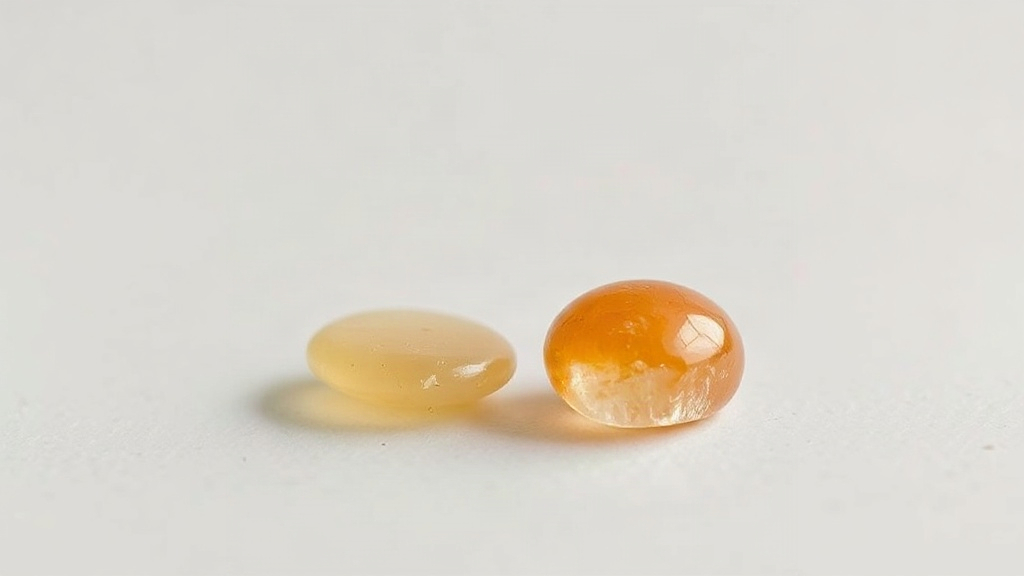
Most citrine is heat-treated amethyst or smoky quartz, which turns yellow-orange when heated to around 470 degrees Celsius. Natural citrine is usually a paler, more even yellow. Neither is fake, but they look and cost different.
| Feature | Natural citrine | Heat-treated amethyst |
|---|---|---|
| Color | Pale to medium yellow, often slightly smoky | Strong orange, amber, or reddish brown |
| Color spread | Fairly even through the stone | Often white or clear near the base, dark at the tips |
| Points | Single terminations common | Clusters with many points common |
| Price | Higher | Lower, widely available |
| Where it forms | Brazil, Bolivia, Madagascar, Africa | Mostly treated in Brazil and Uruguay |
If a “citrine” cluster is bright orange with snow-white bases, it is almost certainly heat-treated amethyst. That is fine to use, as long as you are not paying a natural-citrine price for it.
What is citrine crystal good for?
Citrine is used for confidence, motivation, creativity, and a positive money mindset. Its warm color links it in tradition to the sun and the solar plexus, the energy center associated with personal power and drive.
Practitioners reach for citrine when they want to:
- Start something. A new job search, a business, a creative project.
- Feel steadier speaking up. Meetings, interviews, negotiations.
- Shift their relationship with money from anxiety toward possibility.
- Lift a flat or discouraged mood with a bright, cheerful focus object.
- Anchor a morning routine with a stone that reads as “energy and optimism.”
As with all crystals, the stone works as a reminder and a ritual cue. It gives your intention a place to live, so you return to it more often.
A concrete example: a freelancer who dreads sending invoices keeps a small citrine beside the keyboard. Every Friday they hold it for a few breaths, remind themselves that asking to be paid for good work is normal, and send every outstanding invoice before they close the laptop. The stone did not make the money appear. It turned a task they avoided into a short weekly ritual with a clear start and finish. Six weeks in, their average time-to-payment has dropped because invoices go out on schedule.
Citrine tends to suit people whose block is hesitation rather than effort. If you already hustle hard and feel scattered, a grounding stone may help more. If you hold back, second-guess, and wait to be picked, a warm “go first” cue is a better match.
What are the spiritual benefits of citrine?
The spiritual benefits attributed to citrine center on abundance, willpower, and joy. In crystal tradition it is thought to clear self-doubt, support the solar plexus chakra, and invite prosperity without a “heavy” or draining feeling.
Traditional associations include:
- Abundance and success: the classic “merchant’s stone” used near money and workspaces.
- Personal power: stronger boundaries, less people-pleasing, clearer decisions.
- Creativity: a warm, playful energy that supports making and starting.
- Optimism: a lighter outlook, less rumination.
- Self-cleansing: a widespread belief that citrine does not hold negative energy and rarely needs clearing.
These are folklore and modern crystal-book claims, not scientific findings. Their usefulness comes from the focus and meaning you bring to the practice, an effect well documented in placebo and expectation research.
A fair objection: if the benefit is really focus and ritual, why use citrine at all rather than a plain note? The answer is that a distinct, attractive object is a stronger cue than a sticky note you stop seeing after a day. Color and texture make the reminder stick. Citrine also carries a shared story, “the money stone,” which gives your private intention a bit of borrowed structure. You could get the same result from a coin or a keepsake you assign the same meaning to. The stone is a convenient, pleasant anchor, not a source of power in itself.
Why is citrine considered so powerful?
Citrine is considered powerful mainly because of its long link to wealth and success, its bright sun-like color, and the belief that it stays “clean” without regular cleansing. Together those make it a favorite for money and confidence work.
Three reasons it earned the reputation:
- The merchant’s stone tradition. Shopkeepers were said to keep citrine in the cash drawer, which is why it is still called the “money stone.”
- Sun symbolism. Gold and yellow have stood for vitality, value, and optimism across many cultures, and citrine carries that color naturally.
- Low maintenance. The idea that citrine transmutes rather than absorbs negativity makes it feel easy and reliable to work with.
Take “powerful” to mean “strongly associated with a clear, motivating theme,” rather than a claim about measurable force.
Who should not wear citrine?
There is no real physical reason to avoid citrine, since it is simply quartz. The honest answer is that citrine may not suit you if you want a calming, grounding stone, because its traditional energy is stimulating and outward-facing.
You might choose a different stone if:
- You are seeking calm or better sleep. Amethyst or lepidolite fit that goal better; citrine is a “get up and go” stone.
- You feel overstimulated or anxious. A grounding stone like black tourmaline or hematite may serve you more.
- You follow a tradition with specific rules. Some Vedic astrology guidance ties yellow stones to particular planetary placements. If you follow that system, check with a practitioner you trust.
None of this is a safety warning. It is about matching the stone’s theme to what you actually need right now.
How do you use citrine for abundance and confidence?
To use citrine for abundance and confidence, pair it with a written present-tense intention and a short daily ritual, then place it where money and work happen in your life. The stone is the cue; the habit does the work.
- Write the intention. For example, “I earn well doing work I respect,” on a small card.
- Charge the stone. Hold the citrine, breathe slowly, and say the intention once.
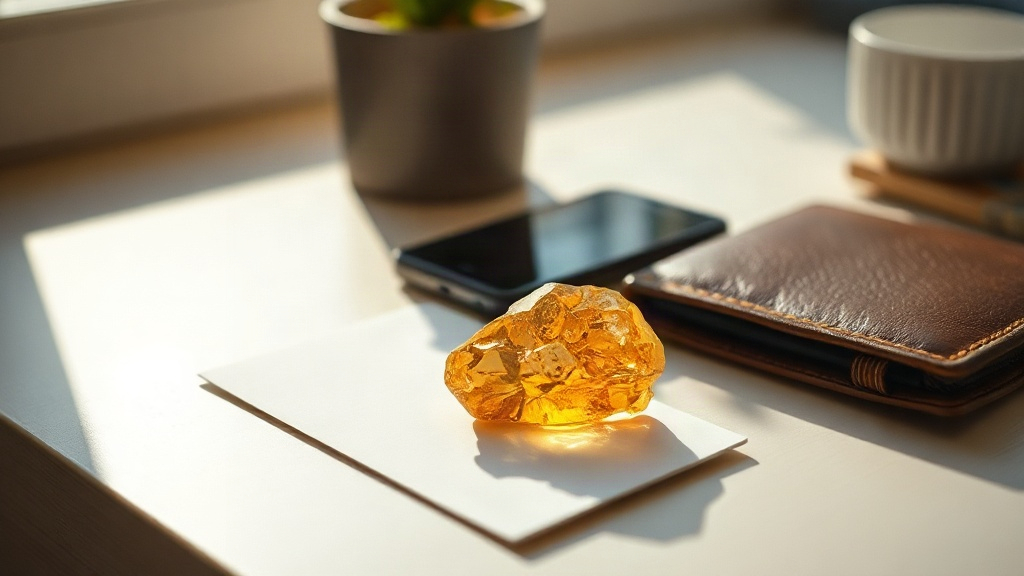
- Place it with purpose. On your desk, by the card, or with your wallet.
- Run a 2 minute morning ritual. Hold it, read the line, picture one concrete scene of that outcome, then do one small action toward it.
- Review weekly. Note progress and update the card.
A worked example over one month: week 1, the intention is “I ask for what my work is worth.” The action is to research market rates. Week 2, the action is to raise your rate on one new quote. Week 3, you ask an existing client for a small increase. Week 4, you review what happened and set the next month’s line. The citrine sits on the rate card the whole time, held for two minutes each morning. The stone’s only job is to make sure you do not skip the daily step, and the compounding of four weeks of small asks is where the change shows up.
Where do you place citrine?
Common placements are the desk or workspace, near your wallet or where you handle bills, on a windowsill that gets morning light, or worn as a bracelet or ring on the hand you use most. In feng shui practice, people often put citrine in the “wealth corner,” the far left area of a room from the entrance. Choose a spot you will see daily, since visibility is what keeps the intention active. For a full setup, see our manifestation altar guide.
How do you cleanse and care for citrine?
Citrine is durable but its color can fade in strong, prolonged sunlight, so cleanse it with gentler methods and keep it out of long midday sun. As quartz, it tolerates a quick rinse in water.
- Best cleansing methods: rest on selenite or a clear quartz cluster, sound from a bell or bowl, or a brief hold under cool running water.
- Use sparingly: short early-morning sunlight only. Hours of direct sun can pale the yellow.
- Avoid: boiling water, harsh cleaners, and ultrasonic machines if the stone has fractures.
- Storage: keep it separate from softer stones so it does not scratch them, since it is harder at Mohs 7.
Many people skip cleansing citrine entirely, based on the tradition that it does not hold negativity. Cleansing when it simply feels right to you is enough.
A practical care example: if you keep citrine on a south-facing windowsill, move it a foot back from the glass or set it behind a sheer curtain. A stone that sits in hard afternoon sun for months can lose a noticeable amount of its yellow, especially in lighter natural citrine. Morning light through a curtain gives you the warm look without the fading. If you wear a citrine ring, take it off before gardening or gym sessions, not because it will shatter, but because knocks over years dull the facets and edges.
How much does real citrine cost, and how do you spot fakes?
Heat-treated citrine is inexpensive, often a few dollars for a tumbled stone or 10 to 40 dollars for a small cluster. Natural, untreated citrine with good even color costs more, and fine faceted natural citrine is priced as a gemstone.
| Type | Typical price range | Notes |
|---|---|---|
| Tumbled heat-treated | 2 to 8 dollars | Very common, fine for practice |
| Heat-treated cluster | 15 to 60 dollars | Bright orange, white base |
| Natural citrine point | 20 to 100+ dollars | Pale, even yellow, sold as natural |
| Faceted natural gem | 20 to 60+ dollars per carat | Priced by color, clarity, cut |
To avoid overpaying:
- Ask directly whether a stone is natural or heat-treated. A good seller will tell you.
- Be skeptical of “natural citrine” that is bright orange with a white base. That look usually means treated amethyst.
- Watch for dyed quartz or glass, which can show air bubbles or an unnaturally uniform color.
- Compare a few shops before buying anything sold as natural.
For more on trustworthy sellers and fake-spotting across all stones, see our guide to where to buy crystals.
A typical shopping mistake looks like this: a listing shows a vivid orange cluster titled “rare natural citrine” for 120 dollars, with photos that show bright tips and chalky white bases. Those bases are the tell. Heat-treated amethyst clusters almost always keep a pale base where the color did not fully change. A natural citrine cluster of that size and saturation would be unusual and would usually come with clear sourcing notes. The stone itself may be perfectly nice to own for 20 to 30 dollars as treated amethyst. The problem is only the label and the price. Ask one question, “is this heat-treated?”, and an honest seller settles it in a sentence.
How does citrine compare to similar stones?
Citrine is often confused with other warm-colored stones. Here is how it differs from the closest look-alikes.
| Stone | What it is | Traditional theme |
|---|---|---|
| Citrine | Yellow quartz, Mohs 7 | Abundance, confidence, warmth |
| Yellow topaz | A different mineral, Mohs 8 | Intention, generosity |
| Amber | Fossilized tree resin, soft | Comfort, clearing, protection |
| Heat-treated amethyst | Amethyst turned orange by heat | Sold and used as citrine |
| Yellow calcite | Softer carbonate, Mohs 3 | Optimism, gentle motivation |
If you want a daily-wear ring or bracelet, citrine and topaz hold up best. Amber and calcite are softer and better kept as display or pocket stones.
One more distinction worth knowing: ametrine. This is a natural stone from the Anahi mine in Bolivia where amethyst purple and citrine yellow appear in the same crystal, split across a clear line. It is used when someone wants both calm and drive in one piece, for example “steady but motivated” during a big project. Genuine ametrine has a soft, natural gradient between the two colors. A sharp, high-contrast split can indicate a synthetic or a doublet, so buy ametrine from sellers who name the source.
Frequently asked questions
What is a citrine crystal good for?
Citrine is used for confidence, motivation, creativity, and a positive money mindset. It is the traditional “merchant’s stone,” reached for when starting projects, speaking up, or shifting how you feel about money.
Who should not wear citrine?
There is no physical reason to avoid citrine, since it is quartz. It may not suit you if you want a calming or grounding stone, because its traditional energy is stimulating. Those seeking sleep or calm often prefer amethyst.
What are the spiritual benefits of citrine?
Tradition links citrine to abundance, willpower, creativity, and optimism, and to the solar plexus chakra. It is also believed to resist holding negative energy. These are folklore claims, and the practical benefit comes from focus and ritual.
Why is citrine so powerful?
Its reputation comes from a long link to wealth and success, its bright sun-like color, and the belief that it stays clean without regular cleansing. “Powerful” here means strongly tied to a clear, motivating theme.
Is most citrine fake?
Not fake, but most citrine is heat-treated amethyst rather than natural citrine. It is real quartz with real color change from heat. Only pay a natural-citrine price when a seller confirms the stone is untreated.
Put citrine to work
Pick one goal about money, confidence, or a project you keep delaying. Write it in the present tense, set a piece of citrine on the card where you handle money, and give it a 2 minute ritual each morning plus one small action.
For a gentle daily prompt while you build the habit, join our free message from the universe and abundance meditation.