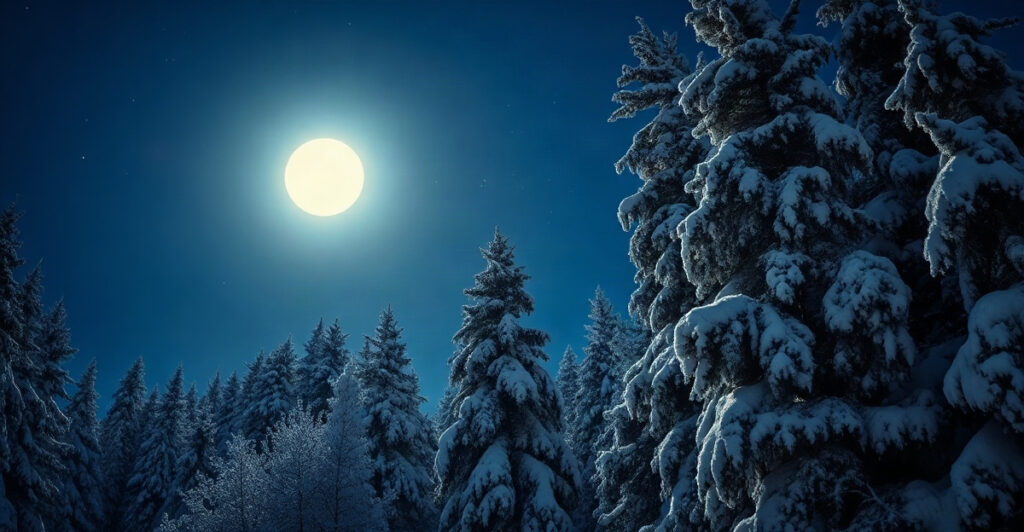
- What it is: the Cold Moon is the traditional name for the full moon that falls in December.
- Why it’s called that: the cold weather and the long nights of northern winter. It may not be the coldest month, but it can feel like it.
- Other names: the Long Nights Moon and the Oak Moon.
- The spiritual theme: endurance, resilience, and the promise of warmer days. It’s often the last full moon of the year.
- When to look: it’s close to the winter solstice. Check a moon calendar for the exact date and hour, because both change every year.
What is the Cold Moon?
The Cold Moon is the traditional name for the full moon that falls in December. It’s one of the old full moon names that follow the seasons, and it belongs to the deepest part of the northern winter.
This is a moon for the long nights. It rises while the evenings are dark early and the air has teeth, and it often sits at the very end of the year.
Have you noticed how a December night feels different from any other? It’s quieter. People stay in. We gather around lights. The Cold Moon belongs to that mood, and it asks you to meet it instead of fighting it.
Why is it called the Cold Moon?
It’s called the Cold Moon because of the cold weather and the long nights of winter in the northern hemisphere. The name is as plain as a name can be, and that is part of its charm.
Countryfile makes a fair point here. December may not be the coldest month of the year, but it can feel like it, especially after a mild autumn. The cold arrives, and your body notices before the thermometer does.
The name also lines up with the solstice. The December full moon falls near the winter solstice, the night with the most darkness in the year. A cold moon in the longest nights, it fits.
What other names does the December full moon have?
The December full moon is also called the Long Nights Moon and the Oak Moon. Some sources say the Long Night Moon name was used by some Native American groups, and that a few tribes called December’s moon the Wolf Moon while others saved that name for January.
The Oak Moon name is linked to oak trees in Celtic and Druidic tradition, and Countryfile ties it to the time when oak trees shed their leaves. Naming varied from place to place, so treat any one list as a view and not the final answer.
| Name | What the name points to |
|---|---|
| Cold Moon | The cold weather and long nights of northern winter |
| Long Nights Moon | The dark evenings around the winter solstice |
| Oak Moon | Oak trees in Celtic and Druidic tradition, linked to the time the oaks shed their leaves |
| Wolf Moon (some groups) | Used by some for December, though many reserve it for January |
When is the Cold Moon, and how do you see it?
The Cold Moon is the full moon that falls in December, and its exact date and hour change every year. Look it up for your time zone on a moon calendar such as timeanddate.com.
In some years it lands a few days before the winter solstice and in other years a few days after. Bustle noted one year when it arrived just a few days after the solstice, on the 26th of December.
For the best view, do what Countryfile suggests. Go somewhere with little light pollution, such as a hill, a park or the coast, ideally when the moon is rising or setting. And if the sky is cloudy, don’t give up, because you may still catch a glimpse.
There’s one more detail worth knowing. The full moon sits opposite the sun in the sky, and in northern winter the sun is low, so the full moon rides high. That’s why a December moon can seem to hang right over your head.
What is the spiritual meaning of the Cold Moon?
The spiritual meaning of the Cold Moon is endurance. It’s the moon that says you’ve made it this far through the year, and you can make it through the dark part too.
Writers associate it with resilience and with the promise of warmer days to come. Countryfile adds an inner note, that this first full moon of winter invites us to connect with our inner selves and with human warmth.
Astrology writing often calls it a time for reflection and release, because in many years it’s the last full moon of the year. A full moon is a time when things come into the open, and many people use it to close a chapter. That’s an interpretation, and a lovely one, but it isn’t a scientific claim.
What does this mean for you in plain words? When it’s dark outside, you turn toward what is inside. You take stock. You decide what to carry into the new year and what to leave on the road.
How can the long dark be useful to you?
The long dark is useful because it takes away distractions. In summer your day is full of light and noise and plans, and it’s easy to stay busy for months without asking yourself one honest question.
In December the early dark sends you home. You sit. You have an evening with nothing in it. And a quiet evening is exactly the place where your own thoughts finally get a turn to speak.
So if the Cold Moon finds you restless or a little low, try treating it as an invitation and not a problem. Ask yourself one thing: what has this year taught me that I didn’t expect to learn? Write down the answer, even if it’s one line. That single line is often worth more than a dozen resolutions.
You might also notice that winter low feels different when it’s named. A heavy mood with no name feels like a weight. The same mood, called “a long night I’m walking through,” feels like a stretch of road. It has an end, and the Cold Moon is a sign that you’re nearly past the middle.
How are the Cold Moon and the winter solstice connected?
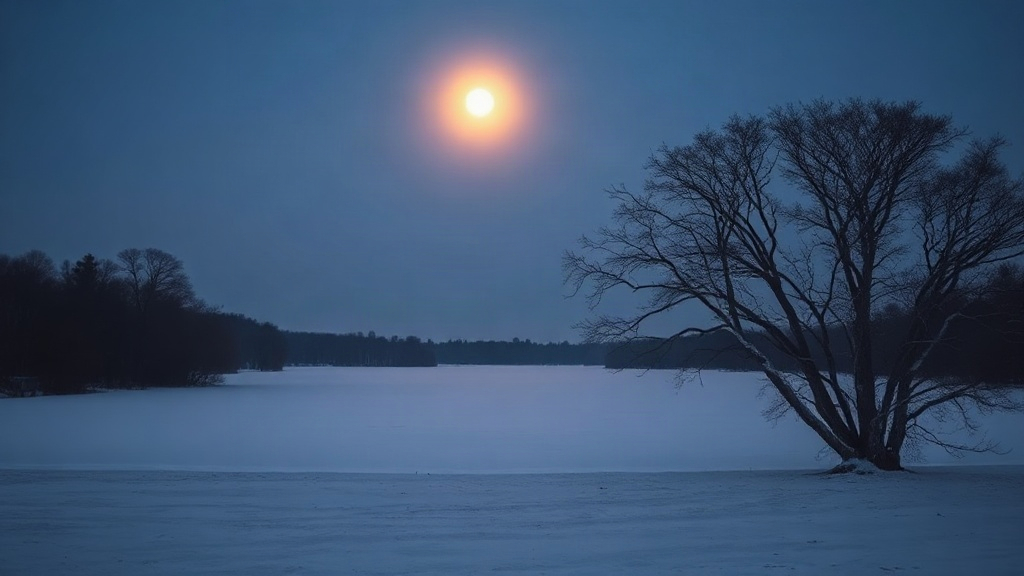
The Cold Moon and the winter solstice share the same stretch of the calendar, and they share the same message: the darkness is deepest now, and the light is about to turn. One is a moon, the other is the sun’s turning point, and they often show up within days of each other.
The solstice is the longest night of the year in the northern hemisphere. After it, the days begin to lengthen, a little at a time. The Cold Moon lights that long night, which is why so many people mark both in the same week.
If you’d like to go deeper into the solstice side, read our guides to the winter solstice meaning and the winter solstice ritual. For the old midwinter feast, see Yule.
How do you do a Cold Moon ritual? Keep, release, carry
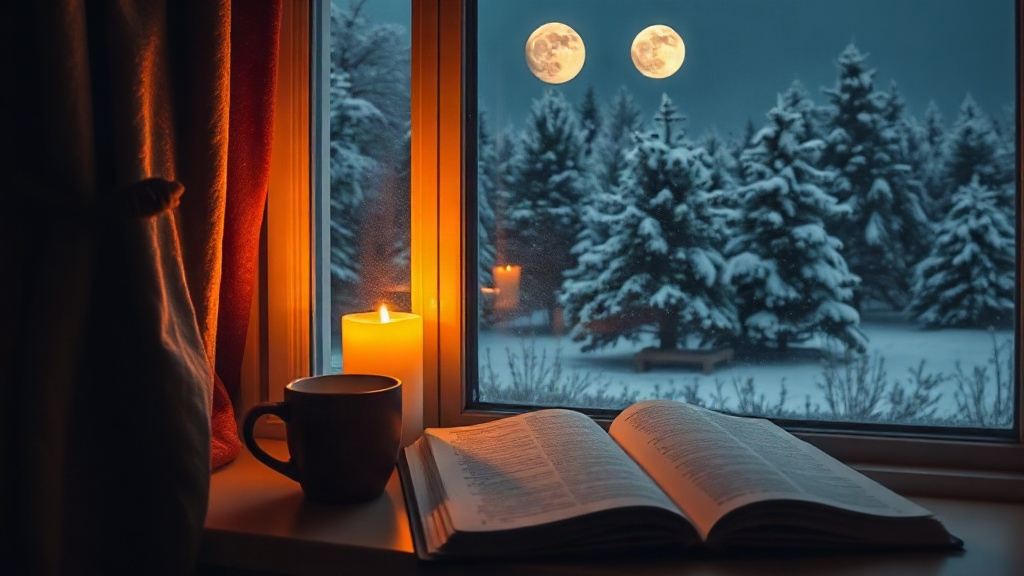
A Cold Moon ritual is a 25-minute evening of taking stock, and it works best as three short lists: what you keep, what you release, and what you carry into the new year. You need a candle, a notebook, a pen, and something warm to drink.
- Light the candle and sit near a window if you can. If the moon is up, look at it for a full minute without your phone in your hand.
- Write your “keep” list. Name 5 things from this year that you want to keep. A friendship, a habit that helped, a lesson you paid for.
- Write your “release” list. Name up to 5 things you’re done carrying. A grudge, a worry, an old story about what you can’t do. Then draw one line through each, slowly.
- Write your “carry” list. Name 3 things you’ll carry into the new year. Make them small and specific, like “a walk every morning” and not “be healthier.”
- Read all three lists out loud. Then say, “The nights are long. I’m still here.” Blow out the candle.
Why three lists and not one? Because letting go without keeping anything leaves you empty, and keeping everything leaves you heavy. The balance is the point.
If something on your release list feels too big for one night, that’s normal. You don’t have to finish letting go tonight. You just have to name it.
What should you do at each hour of the Cold Moon night?
You can spread the ritual across the night so that it feels less like a task and more like a rhythm. Here’s a simple way to do it.
| When | What to do | Time needed |
|---|---|---|
| Evening | Light a candle, write your keep, release and carry lists | 25 minutes |
| Around midnight | Step outside, look at the moon, take 10 slow breaths in the cold air | 5 minutes |
| Next morning | Read your “carry” list once and pick the first small action | 3 minutes |
What is the warmth practice?
The warmth practice is a way to answer the one thing the Cold Moon asks of you: connect with human warmth. Countryfile raises the idea, and almost nobody turns it into something you can actually do.
Here is the practice. Before the week is over, contact 3 people. A message is enough, a call is better, and a visit is best.
Choose one person you’re close to, one person you’ve lost touch with, and one person who may be having a hard winter. Say something true and short. “I was thinking about you tonight. I hope you’re warm.”
You’ll be surprised how much that does for you. The long nights are hardest when you face them alone, and a little warmth sent out has a way of coming back.
What is documented, and what is interpretation?
The name and its link to winter are documented in almanacs and in the writing that cites them. The spiritual meanings are interpretation. Keeping the two apart helps you enjoy the moon without leaning on claims that don’t hold up.
| Claim | What the sources support |
|---|---|
| December’s full moon is called the Cold Moon | Well supported by almanac and press sources. |
| It’s named for the cold and the long nights | The standard explanation. Countryfile points out that December may not be the coldest month of the year. |
| It’s also called the Long Nights Moon and the Oak Moon | Supported by Countryfile. The Oak Moon link to Celtic and Druidic tradition is traditional, not a precise record. |
| It stands for endurance and resilience | An interpretation widely repeated in modern writing. |
| It is a moon of reflection and release | An astrological interpretation. It’s meaningful to many people but not established fact. |
Frequently asked questions
What is the Cold Moon?
The Cold Moon is the traditional name for the full moon that falls in December. It’s named for the cold weather and long nights of northern winter.
Why is it called the Cold Moon?
It’s called the Cold Moon because of the cold and the long nights of winter. It also falls near the winter solstice, the night with the most darkness in the year.
What are the other names for the December full moon?
The December full moon is also called the Long Nights Moon and the Oak Moon. Some Native American groups used other names, and naming varied by region.
Is the Cold Moon a supermoon?
Some years it is and some years it isn’t. A supermoon is a full moon that happens when the moon is close to Earth, so check a moon calendar for the current year.
What is the spiritual meaning of the Cold Moon?
Its spiritual meaning is endurance and resilience, with the promise of warmer days ahead. Many people also use it for reflection and release at the end of the year.
How can I celebrate the Cold Moon?
Light a candle, write what you want to keep, release and carry into the new year, step outside to look at the moon, and send warm messages to 3 people.
Carry the light through the dark
The universe keeps sending you signs. Get one in your inbox every morning, join the free daily message from the universe. Looking ahead to the new year? Try our new year ritual.