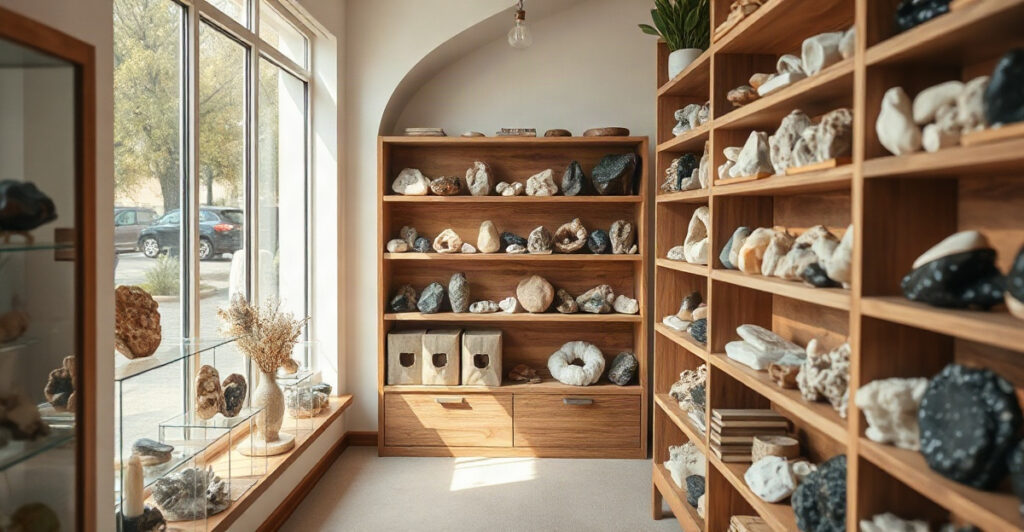
The best place to buy crystals is a local rock and mineral shop or a specialist online seller that names each stone’s species and origin, shows the exact piece you will receive, and offers returns. Avoid generic marketplace listings with stock photos, rainbow “unicorn” names, and prices that seem too good to be true.
This guide covers where to shop, what a good crystals store looks like, fair prices, how to spot fakes, ethical sourcing, the religious questions people ask, and what to do once your stones arrive.
Where is the best place to buy crystals?
The best places to buy crystals, in rough order of reliability, are local rock and mineral shops, gem and mineral shows, established metaphysical stores, and specialist online dealers with clear sourcing. Each has trade-offs.
- Local rock and mineral shops: you can see and hold the stone, ask about origin, and skip shipping. Owners are often serious mineral people who label species correctly.
- Gem and mineral shows: the widest selection and best prices, with dealers who specialize in single regions or species. Bring cash and questions.
- Metaphysical or wellness shops: convenient and curated, though prices run higher and labels can lean on marketing names.
- Specialist online dealers: good for specific pieces if the seller photographs the actual stone, lists the species and country, and takes returns.
- General marketplaces: use with caution. Stock photos, vague names, and bulk dropshipping make misrepresentation common.
For what these stones are and how they are used, start with our guide to crystals and their meanings.
What should you look for in a crystals store?
A trustworthy crystals store is transparent about what it sells: the correct mineral name, the country of origin, any treatments, and clear photos of the individual piece. Those four things separate a good seller from a risky one.
| Green flag | Red flag |
|---|---|
| Species named (e.g. “chalcedony,” “dyed howlite”) | Only a marketing name (“cleansing stone”) |
| Country or mine of origin listed | No origin anywhere on the site |
| Treatments disclosed (heated, dyed, irradiated) | “Natural” on obviously dyed stones |
| Photo of the exact piece you receive | One stock photo for a bulk listing |
| Clear return and refund policy | All sales final, no contact details |
| Reasonable, market-range prices | “Rare” stones far below normal price |
You do not need every green flag, but a shop with none of them is a shop to skip.
A quick test you can run in two minutes: open three product pages on a site and see whether each one tells you the mineral species and the country it came from. If all three say only “rose quartz heart, promotes love” with a single glossy photo reused across sizes, the shop is curating a vibe, not selling identified minerals. If the pages read “rose quartz, Madagascar, natural, this exact 84 g piece pictured,” you are dealing with someone who knows and respects the material. The difference in price is often small, and the difference in what you actually receive is large.
How much should real crystals cost?
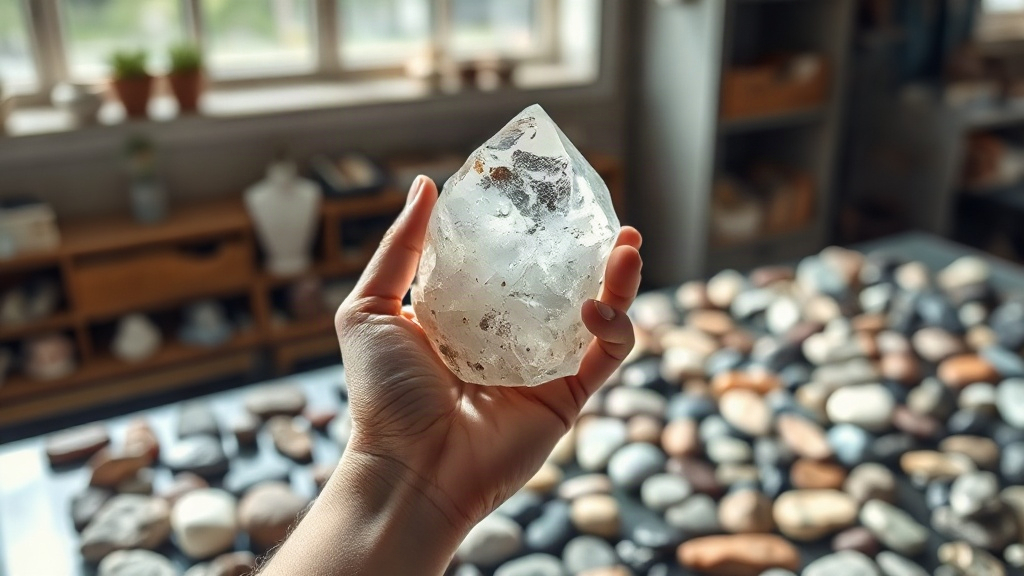
Real crystals span a huge price range, from a dollar for a small tumbled stone to hundreds for a large, well-formed specimen. Common stones in common sizes are cheap, and price rises with size, clarity, color, rarity, and formation quality.
| Item | Typical price | Notes |
|---|---|---|
| Tumbled stone (common) | 1 to 6 dollars | Amethyst, rose quartz, clear quartz, tiger’s eye |
| Small raw point or cluster | 8 to 40 dollars | Depends on species and quality |
| Palm stone or sphere (2 to 3 in) | 15 to 60 dollars | Labradorite and moonstone cost more for good flash |
| Statement specimen | 60 to 300+ dollars | Large amethyst geodes, fine tourmaline, rare locality pieces |
| Bracelet (beaded) | 10 to 45 dollars | Dyed stones should cost less, not more |
If a seller prices a “rare” stone well below these ranges, assume it is dyed, synthetic, or misnamed until proven otherwise.
Size and form drive price more than most beginners expect. Two amethyst clusters from the same mine can differ tenfold in price because one has clean, undamaged points and a pleasing shape while the other has chipped tips and a broken base. Color saturation matters too: a deep, even purple amethyst costs far more than a pale, patchy one of the same size. When you compare prices, compare like for like, same species, similar size, similar quality, or the numbers will not mean anything.
How do you spot fake or misrepresented crystals?
Most “fake” crystals are real materials sold under the wrong name, or natural stones that have been dyed or heated without disclosure. A few are glass or plastic. Learn the common swaps and you will avoid the majority.
| Sold as | Often actually | Tell |
|---|---|---|
| Turquoise (cheap) | Dyed howlite or magnesite | Chalky when scratched, dye in cracks, too uniform |
| Citrine (bright orange) | Heat-treated amethyst | White base, burnt-orange tips |
| Aqua aura, “flame” auras | Quartz with metal vapor coating | Unnatural even iridescence; disclosed by honest sellers |
| Clear quartz (flawless, cheap, big) | Glass | Air bubbles, no internal fractures, warms slowly |
| Moldavite (cheap, abundant) | Green bottle glass | Real moldavite is scarce and expensive with etched texture |
| “Cherry quartz,” “pineapple quartz” | Dyed glass | Invented names, vivid color, bubbles |
Quick checks: real crystals usually feel cool and take a moment to warm, often have internal flaws or inclusions, and rarely come in candy colors with no natural equivalent. When a color or name sounds magical, search the species name plus “dyed” before buying.
A worked example with a bracelet: you find a “blue turquoise” beaded bracelet for 12 dollars. Genuine turquoise at that bead size would usually cost several times more. You look closely at the photos and see the color is perfectly even, with darker dye pooled in the tiny surface pits and no natural matrix veining. That is dyed howlite or magnesite, both real minerals, both worth a few dollars, neither one turquoise. The bracelet may be perfectly nice to wear. The problem is only the name and the implied value. If the listing had said “dyed howlite, turquoise color,” it would be an honest 12 dollar item.
What are the best websites to buy real crystals?
The best crystal websites are specialist shops and individual mineral dealers who photograph each piece, list species and locality, and disclose treatments, rather than large stores selling from one stock image. Judge a site by its listings, not its homepage.
What to check on any site before buying:
- Are pieces photographed individually, with size and weight?
- Is the mineral species named, not just a vibe word?
- Is origin listed, at least the country?
- Are treatments disclosed for anything dyed, coated, or irradiated?
- Is there a return policy and a real contact address?
- Do reviews mention accurate descriptions, not just fast shipping?
Mineral-collector dealers, university and museum gift shops, and members of gem and mineral associations tend to score well on all of these. On marketplaces like Etsy, buy from sellers with detailed species notes and thousands of consistent reviews, and message them a question first.
What about wholesale and bulk crystals?
Wholesale crystals are sold by the kilo or flat by importers, mainly to resellers, and usually require a minimum order and sometimes a business tax ID. If you only want stones for personal use, wholesale rarely saves money once you account for the minimum spend and the variable quality of a mixed lot. If you are starting a small shop, order a sample kilo first, check species accuracy and breakage, and only then scale up with that supplier.
How do you find a good crystals store near you?
To find a good crystals store near you, search for “rock and mineral shop,” “lapidary,” and “metaphysical store,” then cross-check with local gem and mineral club listings and any nearby natural history museum shop. Rockhound clubs almost always know the best local sources.
- Search several terms. “Crystal shop” alone misses serious mineral dealers who use “rocks,” “gems,” or “lapidary.”
- Check for a gem and mineral society in your area. Their shows and swap meets are the best-value buying events of the year.
- Read reviews for the word “accurate.” Look for customers noting correct IDs and helpful staff, not just ambiance.
- Visit before you spend much. Handle stock, ask two or three origin questions, and see how the staff respond.
- Ask other buyers. Local crystal and witchcraft community groups share shop recommendations freely.
Are cheap crystals always fake?
No. Many genuine, popular crystals are inexpensive because they are abundant. Amethyst, clear quartz, rose quartz, tiger’s eye, sodalite, and aventurine are all real and cheap in small sizes.
Cheap becomes a warning sign when:
- The stone is normally rare or costly, like moldavite, fine turquoise, or large flawless quartz.
- The color has no natural version, like bright magenta “quartz.”
- The name is invented, like “cherry quartz” or “opalite,” which is glass.
- A “natural citrine” cluster is bright orange with a white base, meaning treated amethyst. See our citrine crystal guide for the details.
Judge price against the specific stone, not crystals in general. A five dollar tumbled amethyst and a five dollar “moldavite” are not the same story: one is a fair price for a common stone, the other is impossible for a genuine tektite that sells for many times that. Learn the going rate for the two or three stones you actually want, and you will spot the odd listing quickly.
Is buying crystals ethical?
Crystal mining raises real concerns, and “ethically sourced” is often a claim without proof. Some stones come from small-scale mines with poor safety, environmental damage, or child labor, and the supply chain from mine to shop is usually long and hard to trace.
What you can reasonably do:
- Ask sellers where a stone was mined, not just where it was cut or polished.
- Favor dealers who name specific mines and can describe their supply chain.
- Prefer stones from countries with stronger mining regulation when a choice exists, such as the United States, Canada, and parts of Europe.
- Buy less, keep it longer. A small, intentional collection has a smaller footprint than a constant stream of new stones.
- Consider secondhand. Estate pieces and collection break-ups put no new demand on mines.
No purchase is perfectly clean, but questions and restraint move the needle.
A realistic example of asking well: instead of “are these ethically sourced?”, which invites a scripted yes, try “which mine or region is this amethyst from, and do you buy it direct or through an importer?” A seller with a real supply chain can usually answer in a sentence or two, name a country and often a state or mine, and tell you whether there is a middle layer. A seller who only repeats “ethically sourced” without specifics has probably bought a mixed pallet and does not actually know. Neither answer has to end the sale, but it tells you how much weight to put on the label.
What does God say about using crystals?
The Bible does not address modern crystal healing directly. It describes gemstones as beautiful and valuable, for example in the high priest’s breastplate and the New Jerusalem, but it also warns against divination and seeking power from sources other than God.
How people land on this varies:
- Many Christians are comfortable with crystals as decorative objects or as neutral focus tools for prayer and reflection, the way a cross or a candle can be.
- Some Christians avoid them when the use involves channeling “energy,” fortune-telling, or attributing power to the stone itself, which they read as conflicting with passages against divination.
- Other faiths differ too. Practices vary widely across traditions, and some have their own long history of sacred stones.
If this matters to you, the honest test is intention: using a stone as a reminder to focus sits differently from believing the stone has independent spiritual power. Decide where your own line is.
What do you do with crystals after buying them?
After buying a crystal, confirm what it is, give it a light cleanse, set an intention for it, and store it where soft stones will not scratch and light will not fade it.
- Identify it. Save the seller’s species and origin note. Photograph the stone.
- Cleanse it once. Rest it on selenite or a quartz cluster, or use sound. Keep selenite, malachite, and pyrite out of water.
- Set an intention. Hold it, breathe, and say in one sentence what it is for.
- Place or store it. Display where you will see it, or store harder and softer stones separately in a lined box.
- Use it in a routine. Pair it with a daily habit so it stays active, as in our manifestation altar guide.
Frequently asked questions
Where is the best place to buy crystals?
Local rock and mineral shops and gem and mineral shows are the most reliable, since you can inspect stones and ask about origin. Established metaphysical stores and specialist online dealers with clear sourcing are good too. Be cautious with general marketplace listings that use stock photos.
How much should real crystals cost?
Common tumbled stones run 1 to 6 dollars, small raw points and clusters 8 to 40 dollars, palm stones and spheres 15 to 60 dollars, and large fine specimens 60 to several hundred. Price rises with size, color, clarity, and rarity. A rare stone priced far below range is a red flag.
What is the best website to buy real crystals?
Any site that photographs each piece individually, names the mineral species and country of origin, discloses treatments, and offers returns. Specialist mineral dealers and museum shops tend to meet this bar. On marketplaces, buy only from detailed, heavily reviewed sellers.
What does God say about using crystals?
The Bible does not mention crystal healing directly. It presents gemstones as valuable and beautiful, but warns against divination. Many Christians use crystals as neutral focus objects, while others avoid uses involving energy work or fortune-telling. Intention is the common dividing line.
Are cheap crystals fake?
Not usually. Amethyst, quartz, rose quartz, tiger’s eye, and aventurine are genuinely inexpensive because they are abundant. Cheap is only a warning sign for normally rare stones, invented names, or colors with no natural equivalent.
Buy fewer, use them well
Pick one stone from a seller who tells you what it is and where it came from, cleanse it once, and put it to work inside a daily habit. That beats a shelf of mystery stones you never touch.
For a gentle daily prompt while you build the practice, join our free message from the universe and abundance meditation.